Think about national flowers for a second. Most countries pick something you can actually find. A rose, maybe. Or a tulip. Something that grows in a garden. Or even just along the roadside somewhere. Something familiar.
Fiji did not do that.
The flower they chose as their national symbol is not something you will see on a casual stroll. It is not in the resort gardens where most tourists stay. You definitely will not find it at a market stall.
So what gives? Why would a country pick a flower that most visitors never even lay eyes on?
Turns out, the answer is pretty interesting. Volcanoes. Love stories. A plant that refuses to grow anywhere else.
But first, let me actually tell you what the national flower of Fiji is.
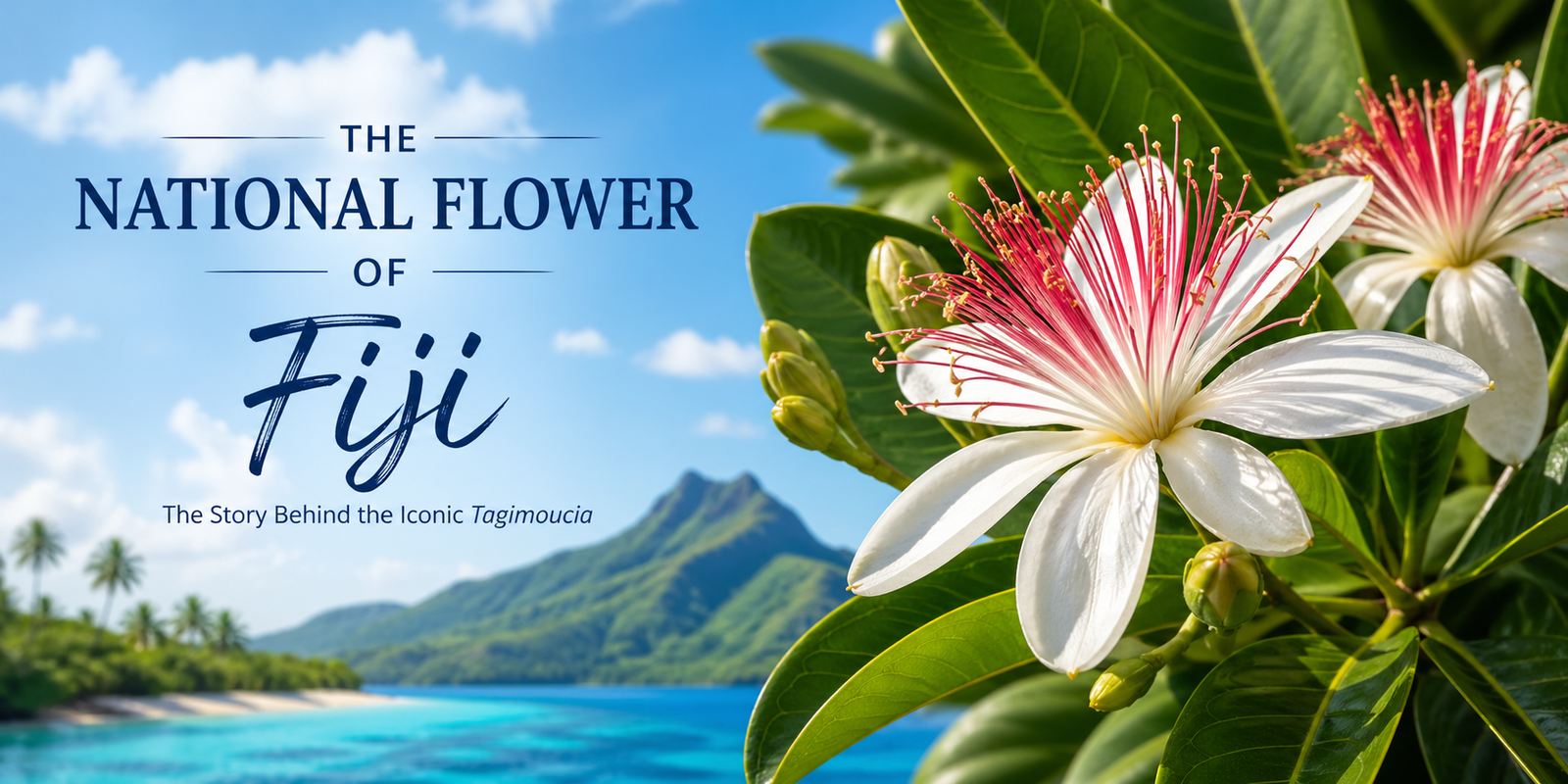
It is called the Tagimoucia. And honestly, it looks a little unreal. The bloom has five petals. Deep red in the middle, but then the edges fade into this soft white color. Like someone dipped them in cream. The contrast is striking.
When you see a photo, you might think it is edited. But no. That is just how it grows.
The name Tagimoucia comes from the local language. There are a few different stories about what it means. Some say it translates to “cry from the mouth,” though honestly, the meaning shifts depending on who you ask.
What matters more is where this thing lives. Because that is where the whole rarity thing starts to make sense.
You Have to Go to One Specific Spot
Here is where it gets unusual.
The national flower of Fiji does not grow all over the country. Not even close. You have to go to one island. And on that island, you have to go up into the highlands.
So the island is Taveuni. Some people call it the Garden Island. Because everything grows so well. Rainforests, waterfalls. Just green everywhere.
But here is the thing. Even on Taveuni, the
flower of Fiji only grows in one place. This volcanic crater lake. Lake Tagimoucia. About 800 meters up. The air gets cooler up there. And mist. Almost every afternoon, mist rolls in.
That specific spot. That exact combination of soil, temperature, and moisture. That is the only place on earth where this flower grows.
Not on the main island. Not on the popular tourist islands near Nadi. Not in any botanical
garden outside Fiji. Just there.
Right away, you can see why it is considered one of the rarest flowers in Fiji. It basically picked one small corner of the world and never left.
So, Why Is It So Rare?
A few things are working together here.
First, the plant is picky. Really picky. It needs cool, damp conditions that you only find at higher elevations in the tropics. Most of Fiji is warm and low-lying. Only a handful of spots have what the Tagimoucia needs. The crater lake on Taveuni happens to be one of them.
Second, the flower never spread. Some plants are good at traveling. Seeds float on the wind or stick to bird feathers. Not this one. It evolved in that one small pocket and stayed put. No ambition to take over the world.
Third, it is sensitive. Even small changes in rainfall or temperature can mess with when it blooms. And here is the thing. The whole population lives in one tiny area. So anything that hurts that habitat? That is a real problem.
There is also the timing factor. The Tagimoucia does not bloom all year. You have to catch it between October and December. Show up in January, and you will just see green vines. You might not even realize what you are looking at.
So yeah. One island. One lake. A short blooming window. Very specific weather needs. That is the recipe for rarity.
What the Flower Means to Fijians
Given how hard it is to find, you might wonder why Fiji made this flower its national symbol.
Honestly, I think that choice says something nice about the country.
The national flower of Fiji is not something you can claim easily. You have to work for it. You have to travel. You have to hike. In that way, the flower kind of reflects how Fijians feel about their home. Fiji is not just another beach destination. It is specific. It is precious. It does not hand itself over to just anyone.
There are also old stories about the flower. Local legends. Take one story. A young woman falls for a warrior from another tribe. He left. She cried so much that her tears became red and white flowers along the path. Another version is different. A princess who ran away into the mountains. The flowers bloomed where she walked.
People do not tell these stories loudly. They are more like quiet knowledge passed down. There is a tenderness to how locals talk about the Tagimoucia.
And because the flower is so rare, there is an unspoken rule. You do not pick it. You do not try to dig it up and plant it somewhere else. You just let it be. Some things are not meant to be owned.
Can a Traveler Actually See It?
Real talk? You can. But it takes effort for sure.
Getting to Taveuni is the first step. That means a short flight or a ferry from the main island. Not hard, but it adds time to your trip.
Once you are on Taveuni, you need a local guide. Someone who knows the trails up to Lake Tagimoucia. Do not get me wrong, the hike is not awful. But it gets steep in places. And the weather can turn fast. One minute sunny, the next minute raining.
The bigger challenge is timing. You have to be there between October and December. That is it. If your trip is in July, forget it. And even during the blooming months, it changes year to year. Depends how much rain came down.
Most travelers never bother with any of this. They come for beaches, cocktails, and sunsets. Nothing wrong with that. But if you are curious. If you want something different. Then going to see the Tagimoucia? That becomes its own kind of reward.
A few eco lodges on Taveuni offer guided trips to the lake. Do not expect souvenir stands or paved paths. You will get a quiet hike through the rainforest and then a view of a crater lake surrounded by red and white blooms.
People who make that hike tend to remember it. Not because the flower is flashy. But because they had to work a little to find it.
Maybe Rarity Is the Whole Point
Here is a thought.
We live in a time when almost everything is easy. You want something? Click a button. It shows up at your door. You want to see a place? Watch a video. You have basically been there.
But the national flower of Fiji refuses to be easy.
It grows exactly where it grows. It blooms exactly when it blooms. It does not care about your schedule or your budget. That could feel annoying. Or it could feel
kind of beautiful.
Rarity makes you pay attention differently. You cannot scroll past the Tagimoucia on your phone. You cannot order a print of it and call it a day. If you want to see it, you actually have to go there. Walk. Wait. And just accept that nature does not perform on command. It never does.
That makes the flower more valuable. Not in a money sense. But in a meaningful sense. It is rare not because it is weak, but because it is faithful to its own conditions. It does not try to grow everywhere. It just grows where it belongs.
That is a quiet kind of lesson, I think.
Wrapping This Up
So why is the national flower of Fiji so rare?
Because it chose one small corner of the world and never left. It needs cool mountain air. It needs that specific volcanic lake. It needs mist and patience, and the right season. Most of Fiji cannot offer those things. So the flower stays where it belongs.
That might sound like a limitation. But honestly, it feels more like a signature.
The Tagimoucia does not shout for attention. It hides a little. It waits. And for the people who make the journey, the flower offers something no photograph can capture. A quiet moment with something that exists nowhere else on earth.
Not every national symbol needs to be easy to see. Some are meant to be discovered slowly. Some symbols are rare for a reason. Maybe that reason matters.
If you ever find yourself on Taveuni between October and December, at least consider the hike. Bring decent shoes. Bring water. Go with a local guide. And if you get lucky enough to see those red and white blooms around that still lake, you will understand right away why Fiji chose this flower.
Not because it is everywhere. But because it is exactly where it should be.