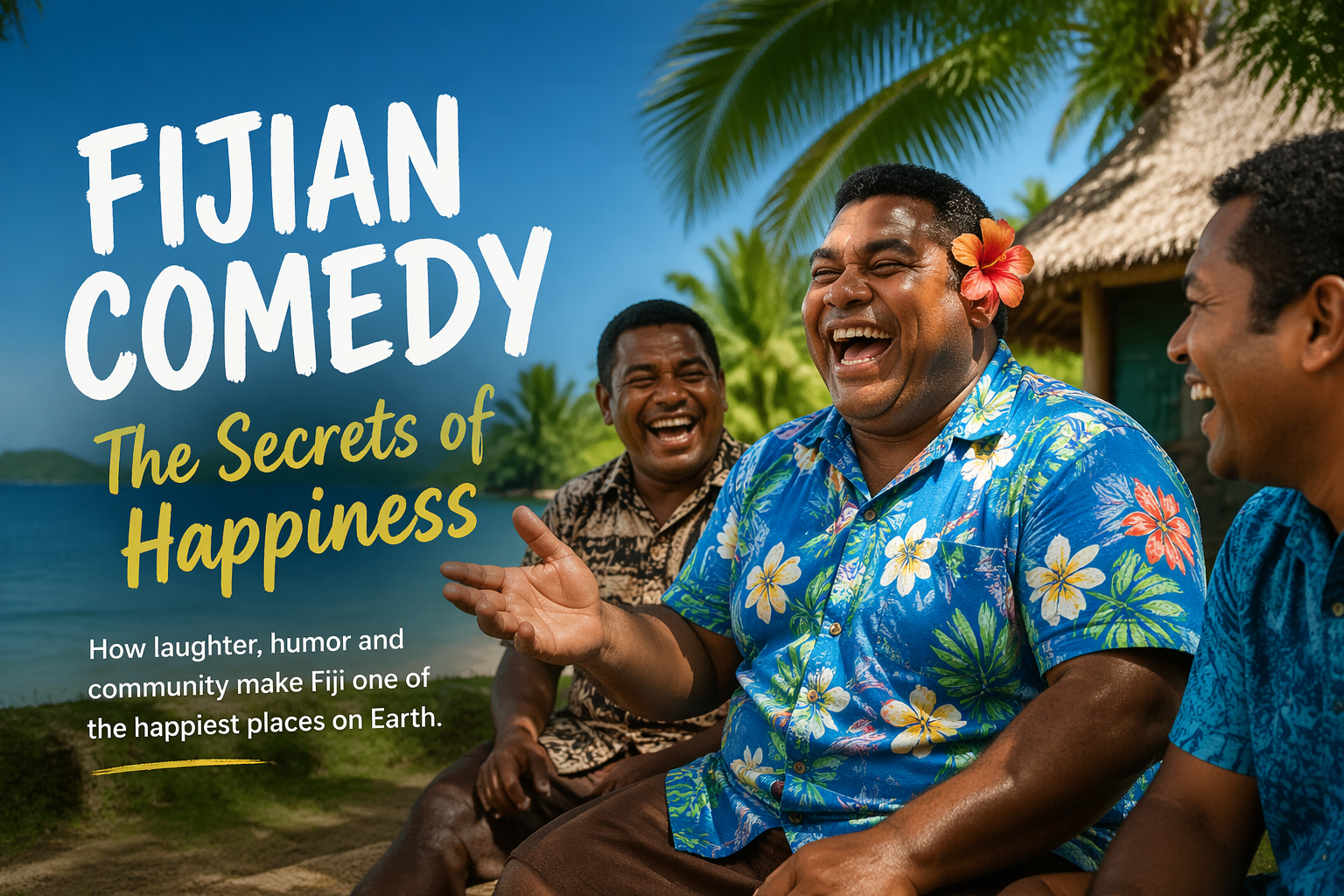
Ever notice how the way people joke around says a lot about a place? Not the big stuff. Not comedians or Netflix specials. Just little things. A throwaway line while someone’s fixing a boat. Friends giving each other a hard time about nothing. Laughter that just happens without anyone being especially funny.
Fiji is different that way. The humor there feels relaxed. Like it’s not performing for anyone.
So I kept coming back to this. Most folks picture Fiji as pretty water and palm trees. And yeah, that’s real. But after hanging around and just listening to people talk, I started thinking maybe there’s more to notice. Something small. Easy to miss.
Like this. Could Fijian comedy actually show us something about being happy that we forgot about? Not the big, dramatic, happy. Just the quiet kind. The kind that’s already there if you stop rushing.
What Makes Fijian Humor Feel Different
You don’t hear a lot of setup-punchline jokes in Fiji. No one is doing stand-up routines at the local market. The humor just sits inside regular conversation. You hear it in the pauses. A raised eyebrow here. A long story that starts going one way, then another, then somehow finds its way back to the point. Or doesn’t. No big deal either way.
People tease each other a lot, too. Light stuff. Someone walks in late, and a friend goes, “Ah, island time again, huh?” Everyone laughs. Even the late person. No one is actually annoyed. The joke isn’t meant to cut. It’s meant to include.
That’s the first thing worth noticing. Fijian comedy isn’t performative. It doesn’t require a microphone or an audience. It just requires other people. People laugh together over a bowl of kava. Or while someone’s shelling peas. Just being there together is.
This? This just feels like resting. Like a different frequency entirely.
Humor Without Rush
There’s something about the pace of
life in Fiji that changes how humor lands. Not because people are lazy or careless.
A funny observation doesn’t need to be delivered instantly. It can sit there.
Most of us are used to humor that gets to the point. Quick. Efficient. The laugh comes, then you move on. But Fijian comedy often unfolds like a wave—building slowly, curling around a few details, then finally breaking. And the laugh that follows feels earned. Deeper.
It makes you wonder what we’ve traded for speed. Not just in humor, but in everything. We’ve optimized the fun out of our pauses. We’ve turned conversation into a series of exchanges to be processed and filed away. In Fiji, a joke isn’t a transaction. It’s an invitation to stay a little longer.
The Connection Between Humor and Community
Here’s what I noticed.
In a lot of places, humor turns into a competition. Who’s funnier? Who’s faster with a comeback? Laughter feels like a prize.
Fiji isn’t really like that.
The joking there just holds things together. That’s it. Nothing fancy. People laugh. Not because it was clever. It wasn’t. But suddenly everyone relaxes. Strangers don’t feel like strangers anymore.
That’s most of it, honestly.
And because people there actually know their neighbors, share meals, and show up for each other, the humor fits right in. A joke fixes an awkward pause. It forgives a little mistake. It says “this isn’t a big deal” without anyone having to actually say that.
We treat laughter like a reaction to something. In Fiji, it felt more like a habit. Something you just do because it keeps things easy between people.
What We Might Have Forgotten
It’s not that modern life is bad. It’s just full. Too much on the calendar. Too much noise. Always being pulled toward whatever’s next. Somewhere along the way, sitting in a moment without reaching for a phone or running through the rest of the day in your head just… stopped happening.
Humor becomes another thing to consume. A quick scroll through memes. A funny video. Laugh, like, move on.

But
the island lifestyle in places like Fiji offers a different rhythm. Not because the internet doesn’t exist or because people are somehow purer. That’s not it. It’s because the culture still values the pause. The slow unraveling of a story. The laughter that isn’t rushed.
What we might have forgotten is that happiness doesn’t always need a reason. Doesn’t need to be earned. Doesn’t need something big to happen first. Just shows up in a joke that’s barely even funny, shared with people you hardly know. That’s allowed.
Is It Something That Can Be “Learned”?
Honestly? You can’t just borrow a culture’s humor. That’d be fake. Kind of disrespectful, too. Can’t just wake up one day and start telling jokes like someone from Fiji. Won’t land the same way.
Just doesn’t work like that.
But you can pay attention differently. Notice when you’re rushing a conversation. Hang around a little longer when someone makes you laugh. Let a joke just sit there instead of jumping to the next thing.
That’s not about copying anyone. It’s more like remembering. This stuff was probably there all along. Before everything got so efficient. Before we squeezed the joy right out of our pauses.
So no. You can’t learn Fijian comedy like a skill. Forget the point. Just leave more space for the kind of funny that doesn’t try so hard. And honestly? That might be plenty.
So can it teach us anything?
Maybe. Not by handing us answers, though.
Just by showing a different way to be. One where laughter doesn’t need a reason. Where jokes are more about being together than being funny. Where happiness isn’t this thing you chase. It just happens. While you’re sitting around. Telling stories. Not rushing.
None of this is new. It’s probably pretty old, actually. We just haven’t looked at it for a while.
Maybe the real question isn’t whether Fijian comedy can teach anything. Maybe it’s whether people can slow down long enough to hear it.