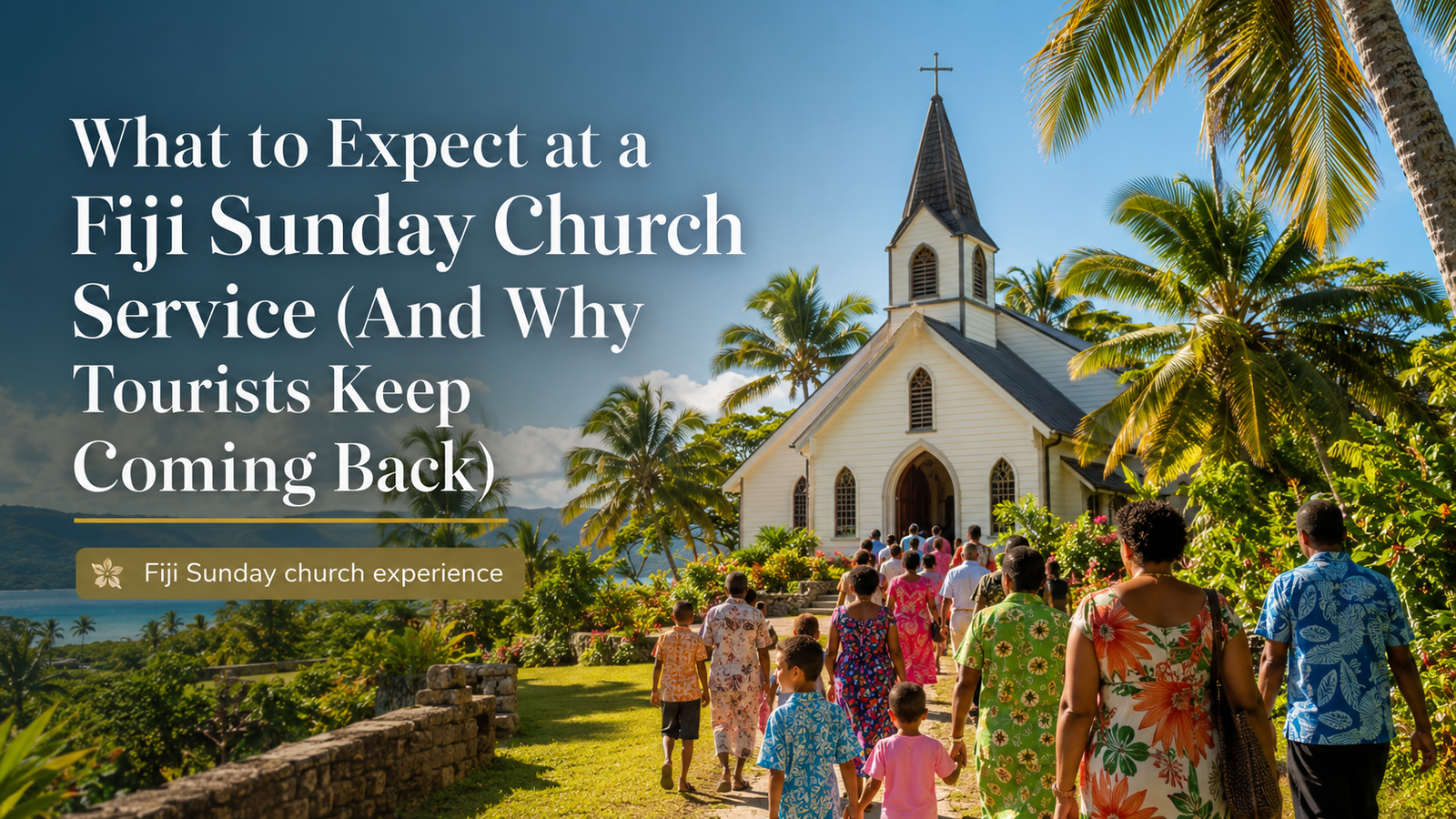
If you’d heard about the Fiji Sunday church experience and were wondering whether it is worth devoting part of your day to, well, in brief, yes; but that could be the best bit of your trip. Not because of the religion. Because of what goes on in there: a community coming together with a warmth and musical force that catches most newcomers off guard.
But here’s the thing: these are the essentials you need to know before you go.
The service starts sooner than you think
In
the villages in Fiji, most of the Sunday services start between 8 and 10 AM. If you’re at a resort, ask your host or concierge to set you up with a local village in advance. While it’s usually perfectly acceptable to show up without an invite in Fiji — locals are notoriously friendly — coordinating through your resort ensures a guide, proper dress code, and someone there to introduce you.
Dress modestly. Shoulders and knees covered. No exceptions.
Make you stop dead in your tracks
The closest thing to being spellbound in the Fiji Sunday church experience is the harmonising. A natural four-part singing people, in a village church without instruments, the result is something extraordinary. It fills the room completely. There are tourists who even say that they stood for over a minute in the doorway before they were able to move.
You don’t need to participate. You don’t need to do anything — stay silent and honour the person. However, you aren’t turned away if you know a hymn and
feel comfortable joining in.
Fiji Food Comes In After the Service
At this time, this is where the experience completely transforms. Most villages will invite people to join them for a communal meal after the service. When you know this, then you can consider yourself actually
introduced to Fijian food.
Think dishes prepared in a lovo — an underground oven. Hearty fare consists of slow-cooked bananas, cassava, fish, and chicken steamed in banana leaves. Easy, wholesome, and definitely not bite-sized dessert buffet resort fare.
If food is offered to you, take it. This is an impolite way to refuse without any reason.
The Cuisine Of Fiji: What You Get In Terms of Eating And Drinking
The Fijian food and drink culture shines with the food. You are served new coconut water, a fruit juice created in the home, or palusami — an opulent dish of coconut cream wrapped in taro leaves. Also, some traditional officials (chiefs) might serve Kava, which is the ceremonial drink made from ground pepper root, but this is usual at formal village ceremonies, not after church.
It has an earthy and somewhat numbing taste. It’s perfectly safe. Saying yes, though, is respectful.
What This Experience Actually Is
It’s not a tourist activity. It’s not a performance. This is simply a community doing what it does every Sunday — and electing to welcome you as part of that. That distinction matters. Treat it like a guest and not as a tourist, and you may leave with something that no beach day can offer you.
Which is why tourists continue to return to speak about it. It’s the Saturday morning in Fiji that nobody schedules, but everyone ultimately remembers.
Frequently Asked Questions
Is the Fiji Sunday church service for tourists only?
Yes, in most cases. Fijians are extremely friendly and welcoming of visitors. The ideal way to ensure you’re going at the right time and rearward communal will be directed by orchestrating packs by your resort or a native manual.
What to wear when going to a Fiji Sunday church service? Conservative clothing is essential.
Women are required to cover their shoulders and knees (a sulu/wrapping skirt can often be found at the entrances to villages). Men should avoid shorts. Remove your hat before entering.
If non-Christians are attending, is it respectful?
Yes. You’re only there as an observer of a culture/guest Weeding through the noise, it is perfectly okay to sit quietly and respectfully — no matter your beliefs.
Is there going to be Fiji food after the service?
Not required, but strongly encouraged. Fijian hospitality is all about sharing a meal. The food you are given to eat in Fiji — taro, cassava, lovo-cooked meats — is fine, and the experience is true.
Where can I find a village church to attend?
Ask your resort directly. Most islands have good links with villages nearby, and it is often possible to organise a visit on a Sunday at short notice.
Is there a cost involved?
Usually, a nice gesture is to bring something small — kava root is the traditional gift.