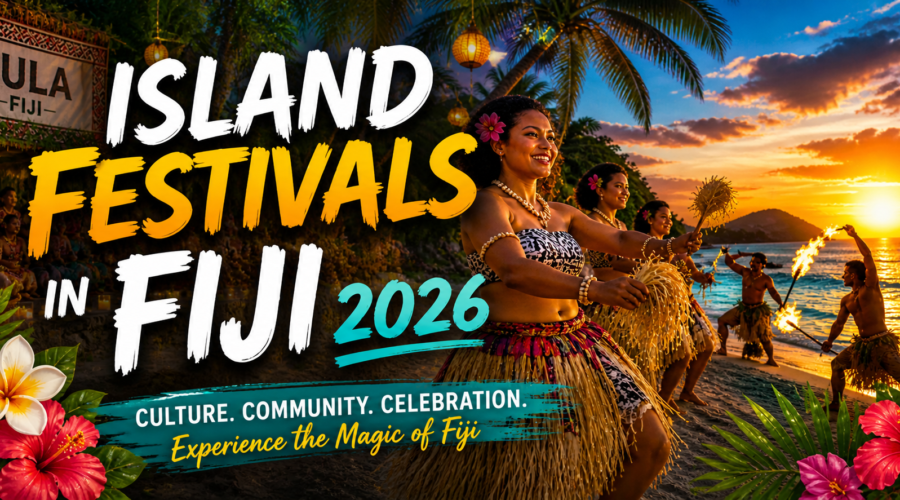
Island Festivals in Fiji 2026: Which Ones Should You Not Miss?
So maybe you’re already mapping out a 2026 trip. Snorkeling spots. Resort sunsets. All fine. But timing your visit around one of the island festivals in Fiji 2026 could change your trip entirely. Not because festivals are more important than lagoons. But because they show you a side of Fiji that doesn’t appear on postcards.
So let me walk you through a few celebrations worth knowing about. Not as a checklist. More like someone describing meals they’ve eaten or evenings they still remember.
Hibiscus Festival – Suva’s Heartbeat
The Hibiscus Festival is in Suva. Usually around August. You go for one thing and somehow end up staying for six hours. Or the whole day.
Locals will tell you it’s the biggest party around. But that word “party” kind of misses the point. Let me try explaining. You’ve got carnival rides right next to food stalls selling Kokoda. Families everywhere. Teenagers laughing too loudly. Grandparents just sitting on benches, watching. It’s festive, sure. But there’s something else underneath that. The Hibiscus Queen competition draws real community attention. Schools prepare for months. You’ll hear choir performances that stop conversations mid-sentence.
What makes this festival special isn’t just its size. It’s how unguarded everyone feels. Strangers offer you cassava chips. Kids run past with cotton candy faces. Forget being a tourist. It just feels like you showed up somewhere good at exactly the right time.
If you’re someone who likes energy but not chaos, this one works. August is dry season, too, so the weather cooperates.
Bula Festival – Nadi’s Welcoming Spirit
The Bula Festival runs in Nadi, usually in July. And if Suva’s festival feels like a city letting loose, this one feels like a town opening its front door.
The name comes from the word you’ll hear a hundred times a day in Fiji. Bula. It means life, health, hello. You’ll figure out real fast why that word matters here. Parades. Music. And yeah, a ton of food. But the real highlight? The friendliness. Vendors remember your face if you come back twice. Someone will explain the difference between the lovo cooking methods whether you ask or not.
The Bula Festival started decades ago to celebrate sugarcane season, but today it’s more about togetherness. You won’t find polished performances for tourists here. You’ll find local school bands, church group dances, and a general sense that everyone belongs.
Smaller than Suva but not dead. Good balance. And July is cooler — you’ll want that after a few hours of outdoor markets.
South Indian Fire Walking Festival – Something Different
Not all festivals in Fiji look like parades and music. Some look like faith.
Fire Walking Festival. October or November usually. At that temple in Nadi — Sri Siva Subramaniya. Tamil tradition. People spend weeks getting ready. Praying. Fasting. Not something you just show up for. On the day itself, they walk barefoot across hot coals. And here’s the thing—you don’t have to understand the theology to feel the weight of it.
The atmosphere is intense but quiet. No cheering. No announcements. Just drumming, incense, and people watching with held breath. When someone walks across and comes out unharmed, the crowd exhales together.
For visitors, this festival asks more of you than others. Not made for entertainment. But go quiet. No flash photos. Just watch. You’ll remember it. This is why travel matters — not the beaches, stuff like this. Not for the spectacle. For the glimpse into what people hold sacred.
Fiji Day. October 10th.
National holiday. Mark’s independence back in 1970. What’s different about this one? It’s not like you go to one spot for this. It’s just happening all over.
Come October 10th, things pop up. Cities have stuff. Villages too. Even little resorts will throw something together. Flag-raising first thing in the morning.
Speeches from community leaders. And by afternoon, it turns into a kind of relaxed, potluck-style gathering. Music. Lovo feasts. Volleyball matches that start friendly and somehow get competitive.
What I love about Fiji Day is how unpolished it feels. Nobody’s performing for a camera. People just… celebrate on their own terms. You might be invited to a village event if you’re staying nearby. Or honestly? Just grab a bench. Watch families fly kites and pass around takeout containers. Not a bad way to spend an afternoon.
And October’s lovely anyway if you can move your dates around. Less rain. And it’s quieter after the summer holiday rush. Adding Fiji Day just gives the trip a quiet anchor.
Local Island Festivals – The Ones Without Websites
This is where things get interesting. Because the best island festivals in Fiji 2026 might not be listed anywhere.
On smaller islands like Beqa, Ovalau, or Taveuni, villages hold their own celebrations. Sometimes it’s for a church anniversary. Sometimes a chief’s birthday. Sometimes it’s just because the taro harvest went well. These aren’t advertised.
Met a traveler once. She ended up at a beach dance on Koro Island. Her homestay host mentioned a “small get-together” that afternoon. Casual like. It turned into singing under the stars. Fish wrapped in leaves. She still calls it one of her best travel memories ever.
That’s the thing about the island festivals in Fiji 2026. The big ones are wonderful. But the small, accidental ones? Those stay with you longest.
What Makes Festivals in Fiji Feel Different
I’ve been to festivals in other places where everything feels scheduled. There’s a map. A wristband. A sense that fun has been optimized.
Fiji doesn’t work that way.
Here, a festival might start an hour late because someone’s grandmother wanted to say a prayer first. The band might take a break that lasts forty minutes. The food stall you wanted might close early because they ran out, and the owner shrugs with a smile and says, “Next time.”
This isn’t inefficiency. Its presence.
And visitors are welcomed genuinely. Not as wallets. As witnesses. As new faces who might clap along even if they don’t know the words.
Finding Your Festival
Love noise and crowds and energy? Hibiscus in August. Bula in July.
Want chill but still something special? Fiji Day. October 10th. You don’t even have to change your trip much.
Just be aware of the date and see what happens locally.
If you’re drawn to spiritual experiences and don’t mind adjusting your plans around lunar calendars, the Fire Walking Festival is extraordinary. But check the exact dates closer to 2026. They shift.
And if you have flexibility—the best kind of travel privilege—plan for two weeks and leave three days open. Stay on a smaller island. Ask locals if anything is coming up. That openness is how you stumble into magic.
Just a few practical things.
Exact dates for 2026 events? You probably won’t see those until late 2025. Hibiscus and Bula tend to be consistent. But the religious festivals? Moon phases. So they shift. Non-refundable flights for one parade? You know the risk.
Also, dress respectfully. At temples or village ceremonies, covering the shoulders and knees is a good rule. At the big street parties, no one minds shorts and sandals. But when in doubt, look around and follow what locals do.
And bring small change. Festival stalls often don’t have card machines. Cash is still king.
You could visit Fiji and never attend a single festival. You could swim, eat well, watch sunsets, and leave happy. That’s a good trip.
But the trips that stay with you usually involve other people. A stranger teaching you a dance step. A grandmother handing you a mango off her own plate. A moment where you stop thinking about your itinerary and just exist in someone else’s celebration.
That’s what island festivals in Fiji 2026 offer. Not just dates on a calendar. Just a chance to be welcomed. Briefly. Honestly. Into a place that knows how to bring people together.
Sometimes it’s not the views you remember. It’s the shared moments. And those don’t fade like tan lines.