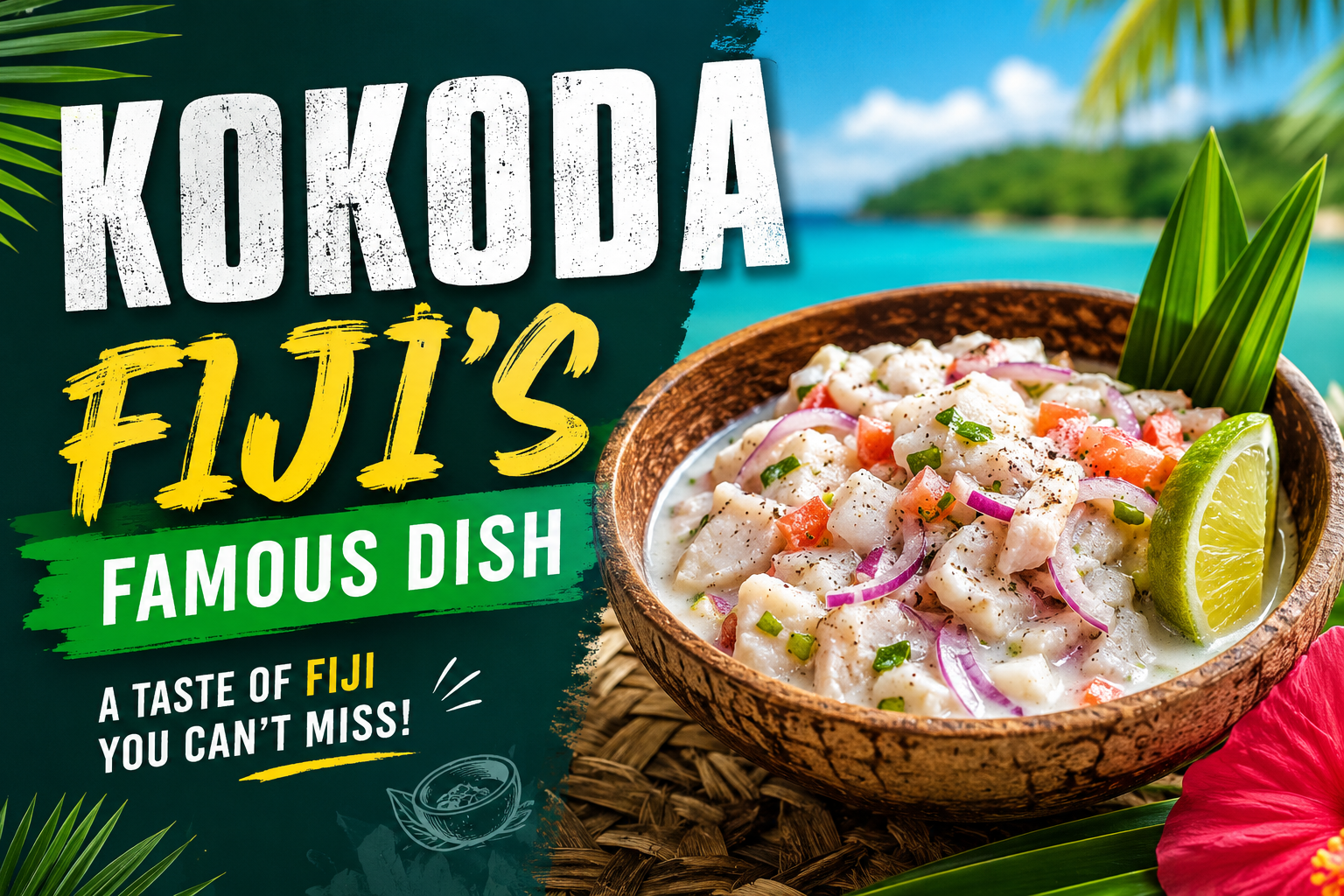
It has already drawn attention, whether on a menu or as discussed at a local feast on the beach, if you have ever heard about Kokoda Fiji. There can be no denying that this is the jewel in Fiji’s crown of cuisine and lifestyle; it’s a basic dish, with a strong taste, and an authentic piece of Pacific Island culture. Here’s all you should know.
What Is Kokoda?
Kokoda (ko-kon-da) is a traditional raw fish dish in Fiji, akin to ceviche in Latin America or the Hawaiian poke bowl. The fish is marinated (or “cooked”) in citrus juice, usually fresh lime juice. The proteins in the fish get cooked without heating, due to the acid denaturing them.
After curing, it’s mixed with creamy coconut cream, which mellows out the tangy lime, and richness can be added. The outcome is a dish that’s vibrant and fresh and also indulgent — a taste that mirrors Fiji itself.
The Key Ingredients
Kokoda Fiji’s short list of fresh, quality ingredients is:
- White fish – wahoo (ono), snapper or mahi-mahi are most prevalent; fish should be very fresh
- Curing agent: lime juice, lemon juice can be used, but it is traditional to use lime juice.
- Coconut cream (fresh preferred to canned) for body and sweetness
- Chilli — for heat, usually added to taste
- Let it cool down a bit before adding the spring onion and coriander (add them for freshness and aroma)
- The fruit or vegetables are often served with tomato and cucumber, which are added for texture and colour.
- Rolls — to roll the nose and hands
It’s the cook who makes the difference in the fish-to-lime ratio and curing time. Very short = fish too raw; very long = rubbery and dry.
How Is It Made?
It’s very simple, but it’s important that it happens at the right time:
- Cube the fish into even, small pieces (1-2cm).
- Cover completely with fresh lime juice and refrigerate for 20–40 minutes until the flesh turns opaque.
- Remove the excess lime juice — this is very important, or otherwise, it will become watery and sour.
- Add coconut cream, chilli, spring onion, tomato, cucumber and seasoning.
- Gently stir and serve right away, preferably in a coconut shell for the true Fijian experience.
Some recipes do this, and add a little lime back in after mixing the coconut cream in, adding acidity when it is ready for consumption not at the start.
Kokoda’s origins.
Kokoda is native to Fiji and has been used as a staple food source for generations within the
coastal communities of Fiji. Fish has always been an important staple in Pacific island people’s diet, and the curing method using citrus, which is found throughout the Pacific from Tahiti to Peru, has a distinctly Fijian flavour, particularly in the use of coconut cream.
A dish more closely associated with the coastal villages on the main islands of Fiji, Viti Levu and Vanua Levu, where fresh fish and fresh coconuts are plentiful throughout the year.
The best places to eat in Kokoda, Fiji.
Kokoda Fiji can be found at almost all local markets, hotel restaurants and resorts throughout the islands. To find the most authentic versions, go for:
- The local village feasts (lovo nights) — communal feasts, in which Kokoda is usually eaten as a starter
- Suva Municipal Market is the main market in the capital, where locals sell fresh produce at low prices.
- Beachside warungs and small restaurants — less slick than the resort restaurants but usually very good.
- Resort versions are generally tidied up and uniform; village versions are more unpredictable, but usually more memorable.
The interactive workshop took place in Kokoda and Fiji Food and Drink Culture.
Kokoda is never alone. It is an integral part of
Fiji’s food and drinking culture, together with the dishes lovo (meats cooked in the earth oven), palusami (taro leaves with coconut cream), and rourou (taro leaf soup). What they all have in common is coconut, used in almost every
traditional Fijian dish.
Kokoda is normally eaten as an appetiser or light lunch, with a cold Fiji Bitter beer or fresh coconut water. It is often used to dip into crackers or taro chips at the resort.
Frequently Asked Questions
If the fish is raw, is Kokoda safe to eat?
In Kokoda, the fish are not “cooked” by heat but instead are acid-cured. The protein structure may be changed by the lime juice, but the lime is not as effective as heat in killing all pathogens. Only have sushi-grade or very fresh fish from a reliable source, and only eat fish that has been prepared that day. Precautions should be taken by pregnant women and immunocompromised persons.
Which fish is ideal for Kokoda Fiji?
A firm white-fleshed fish with low fat content is ideal; wahoo (ono) is considered a traditional fish used in Fiji. Good alternative fish to fish snapper, mahi-mahi and grouper. Stay away from oily fish such as salmon or mackerel—the fat doesn’t mix with the lime and coconut cream.
How much time is required to cure the fish in lime juice?
The average window is 20-40 minutes. Exterior is opaque, centre is still partially translucent at 20 minutes. The cure is more complete at 40 minutes. After 1 hour, the quality of the fish reduces; it becomes tough and chalky.
May I pre-prepare Kokoda?
The fish and vegetables can be prepped ahead, cured and chopped, but the coconut cream shouldn’t be mixed with the other ingredients until serving time. If left for too long, the coconut cream will turn watery.
Is Kokoda the same as ceviche?
They use the same core technique — acid-curing raw fish — but they’re not the same dish. Ceviche is Latin American in origin and uses different citrus profiles, herbs, and no coconut. Kokoda Fiji is distinctly Pacific, defined by its coconut cream base and specific spice profile.
Where does the name “Kokoda” come from?
The origin of the name is debated. Some trace it to a village or regional name within Fiji; others suggest it derives from older Fijian language terms related to fish preparation. It is not connected to the Kokoda Track in Papua New Guinea — that is an entirely different place name with separate origins.
Kokoda Fiji is more than a dish — it’s a concise expression of where the islands sit: fresh ocean, tropical fruit, and the ever-present coconut. If you visit Fiji and skip it, you’ve missed the point.