What Are the 11 Key Facts About Fiji Culture?
Okay, you made it. The flight’s over, the doors of Nadi airport hissed open, and that first hit of Fiji air—thick, warm, smelling of plumeria and just…green—wrapped around you. Someone slid a flower lei over your head. You’re here. Now what?
We’re talking about understanding the why behind the warm smiles, which completely changes how you experience this incredible country. Forget dry lists. Here’s the honest take on the 11 things that really matter and are facts about Fiji culture.
1. The “Village First” Mindset Will Reset Your Perspective
Individualism? Not so much here. Forget the picture-perfect hotel zones. To see the real Fiji Culture, look to the village — the koro. Here, community isn’t just a word. It’s your neighbor bringing food when someone is sick. It’s every adult keeping an eye on every child. It’s everyone showing up to mend a roof or prepare for a wedding, without being asked.
That incredible sense of welcome you feel? It springs directly from this “we’re all in it together” mentality.
2. Respect Isn’t Just Manners; It’s the Social Operating System
You can’t overstate the role of respect (vakarokoroko). It’s the invisible framework holding everything together, and it’s one of the first key facts about Fiji culture to understand. It flows upwards: to elders for their wisdom, to chiefs for their leadership, and to tradition itself. As a visitor, you step into this flow. That’s you speaking the local language of respect.
3. Kava: The Muddy Drink That Opens Doors
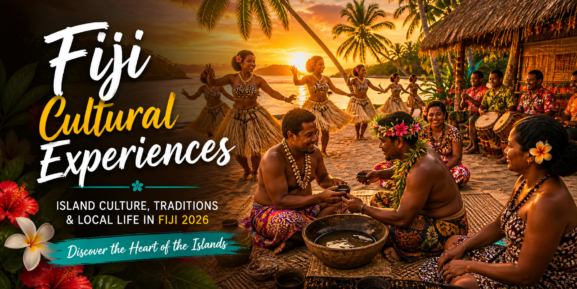
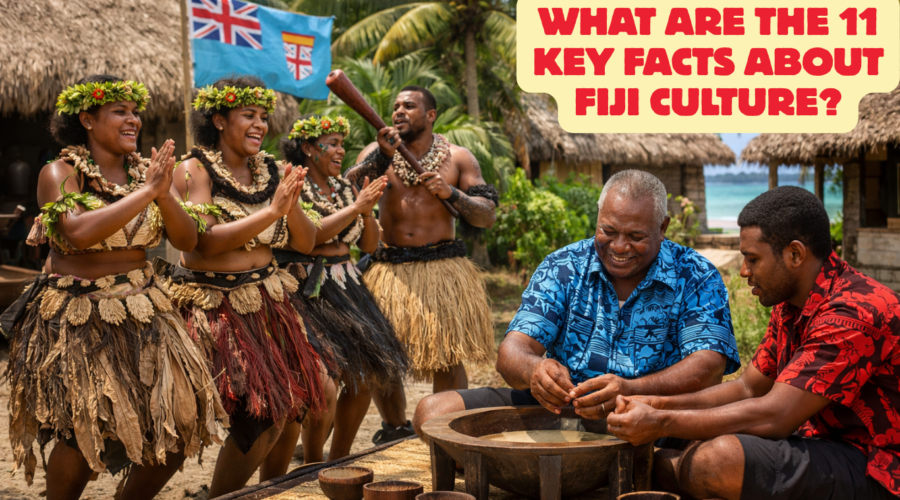
You’ll be offered kava. It looks like dishwater and tastes like earthy pepper. Charming, right? But the taste is the least important part. Sitting on the floor for the yaqona ceremony is your golden ticket. The rhythmic clapping, the shared bowl, the quiet conversation that blooms—this is where you stop being a tourist. Accepting that bilo (cup) is a sign of trust.
4. Why That Wrap-Around Skirt is Your Secret Weapon
Pack a sulu. Seriously. This versatile piece of fabric is the national uniform for a reason. Tying one on before you head into town or a village does two brilliant things: first, it shows you bothered to learn (massive respect points), and second, it’s insanely practical and cool in the heat. Watching a Fijian policeman rock his perfectly pleated sulu with polished boots shows you this isn’t a costume; it’s a point of pride.
5. Sunday is a Deep, Collective Exhale
Saturday is for errands. Come Sunday (Siga Tabu), the nation slows to a sacred crawl. In Fiji, Sunday is different. Stores close. Towns go quiet. What you hear instead is music—hymns drifting from village churches. It’s more than faith. It’s a shared pause. A day for family, stillness, and catching your breath.
Go for a slow walk. Listen to the singing. Let yourself slow down with the rest of the country. You’ll leave feeling more refreshed than any beach nap could make you.
6. Their History Books Have Rhythm and Dance
Forget museums. Fiji tells its history through the meke—a powerful mix of dance, song, and story. This isn’t just a performance. It’s how legends are passed down. The dancers’ steps recall voyages and battles, while their hands trace the motion of the sea and trees.
Watching a meke doesn’t feel like watching a show. You’re being let in on the story of who the Fijian people are.
7. Food is a Language of Generosity
One of the most delicious facts about Fiji culture is how food expresses generosity. You will be fed. And then fed again. A meal is shared among family and friends. There will be talking and laughing. If you are offered more food, that is their way of saying you belong here. They’re saying, “You are welcome here.”
8. “Bula!” is an Attitude, Not Just a Word
You’ll hear it constantly. But “Bula” is more than “hello.” It’s a wish for life and health, delivered with a disarming sincerity. That famous Fijian friendliness isn’t a service industry tactic. It’s a deeply held cultural value. Try matching that openness.
9. The Ocean Isn’t a Backdrop; It’s a Relative
For Fijians, the ocean and land are family. This connection is called vanua—meaning the people, their ancestors, and the land are one. You see it when a fisherman takes only what he needs, or when a place is kept tabu—sacred. It is not just conservation. It is respect for a living relative.
10. Parties are Epic, Inclusive Affairs
Fiji comes alive during its celebrations. Take Diwali, where the night sky fills with light. Or a Fijian wedding—it’s not a short event, but one that goes on for days with shared meals and constant music. Everyone is included.
Someone may invite you to join. You should go. You will eat with your hands, try to dance, and laugh a lot. This is how you feel in real life here.
11. Rugby is the Modern-Day Warrior Spirit
You have to see a Fijian rugby match to understand it. When the national team plays, the country watches. Bars are full. Streets are empty. It feels like the whole nation is watching together. This rugby is more than a sport. It is about pride, community, and incredible skill. It’s pure, electrifying national joy.
The Real Souvenir You’ll Take Home
So, after all these facts about Fiji culture, what’s the real takeaway? It’s what Fiji offers a masterclass in connection.
Fiji shows us a different way to live. You see this in how people live: together, with respect, and by sharing. When you understand this way of life, you don’t just visit Fiji. You feel welcome in it. That feeling, and the people who shared it with you, becomes what you remember.