Are You Ready to Meet the Giants of Marine Life in Fiji?
Let us get one thing straight right now. Fiji’s ocean is not an aquarium where creatures follow a routine. It’s a real, breathing planet where enormous creatures go about their everyday existence. You are the visitor here. The guest. And what incredible hosts await beneath those famous blue waves.
Imagine yourself floating there and gazing down at a vibrant coral reef. Then something shifts. The small fish scatter. A shadow falls across the reef that’s way too big to be ordinary. You suddenly realize that you are no longer the biggest object in this ocean when your heart makes that amusing little skip.
What Makes Fiji’s Waters So Special?
Food and shelter are the two key reasons Fiji’s seas are perfect. The entire ecosystem is fed from the bottom up by the constant influx of plankton and tiny fish brought in by the ocean currents. Concurrently, the complex undersea structure is formed by the coral reefs. This gives larger animals places to hide, hunt, and reproduce safely. It’s this combination that allows incredible marine life in Fiji to not just visit, but to truly thrive here.
But here’s the real secret: Fijians take ocean protection seriously. They understand that healthy waters mean healthy animals. Those marine protected areas aren’t just lines on a map – they’re working conservation zones where fish populations can thrive without pressure. This careful balance is why your chances of encountering giants here are better than almost anywhere else.
Finding These Creatures Takes Some Know-How
You’ve got two choices for meeting the giants that define the marine life in Fiji. You can go it alone, or you can tap into local knowledge. Let me be direct – option two works better every single time.
Local guides don’t just know where the animals are. They understand their routines, behaviors, and preferred hangouts. They understand that manta rays visit particular coral heads at various times of day to clean. They recognize the water conditions that bring whale sharks close to shore. This isn’t guesswork – it’s generations of observation and respect for the ocean.
Float still. Watch carefully.
So, how do you pick a good guide? It is simpler than you think. Look for small groups. A boat with fewer people is always better. Ask them what their rules are for interacting with the animals. A good guide will talk about keeping a distance. They will explain why they do not feed the wildlife. You can also read recent reviews online. Other travelers will often mention if a guide was respectful to the ocean or if they rushed the experience. This little bit of research makes a big difference. It helps you find someone who will give you a better, more genuine encounter.
Meet the Residents You’ll Never Forget
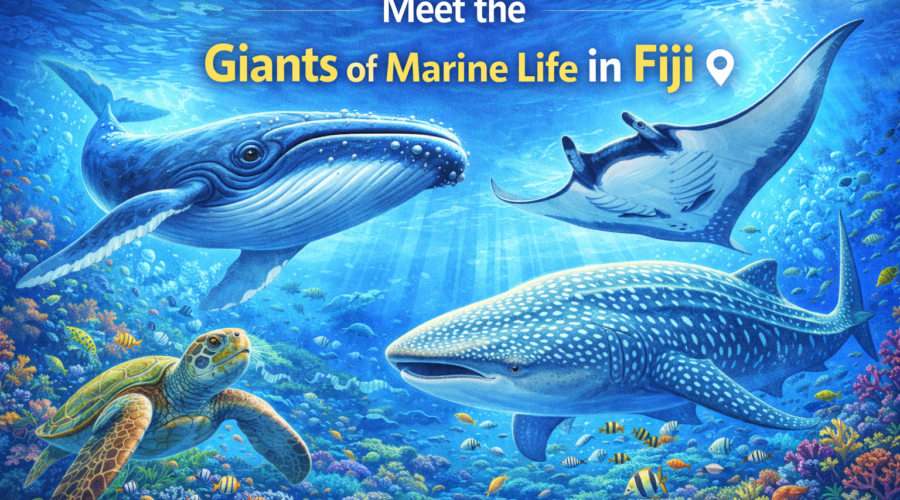
Now for the main event – the legendary giants of the marine life in Fiji.
The whale sharks come first. The elegance with which these speckled giants glide through the water seems unattainable for anything of their size. Although they are filter feeders and pose no threat to people, swimming beside one is both exhilarating and serene. It’s similar to having an audience with underwater kings and queens.
You will also witness manta rays. They don’t truly swim; they fly across the water. Their large, black wings propel them along so effortlessly that it appears easy. They stop at certain spots on the reef to get cleaned by smaller fish. It’s a quiet thing to watch. It feels old.
Come July, the whales show up. These humpbacks travel to Fiji to give birth in our protected waters. You might see a mother and calf swimming together. But nothing prepares you for seeing a giant whale throw its whole body into the air. The crash when it hits the water again is like nothing else you’ve ever heard. The crash is incredibly loud. It shows you how strong nature really is.
And don’t forget the regulars—the fish that live here all year. Then there are the locals. A bold, blue Napoleon wrasse will often come right up to your face. Sea turtles paddle past, never rushing. You’ll see reef sharks too. They’re not risky. They simply swim back and forth, doing their own business. They belong here and are simply going about their day.
How Not to Be “That Tourist”
Listen carefully, because this matters. These are wild animals, not photo props. Your behavior in their home reflects on all of us who love the ocean.
Allow the animals their room. Here’s a decent rule: if the animal behaves differently because you’re around, you’re too near. It might swim off or stop eating. Do not follow it. Do not reach for it. You are a guest watching from the sidelines, not someone who gets to join in.
Watch your fins. Coral isn’t rock – it’s a living animal that takes years to grow. One wrong kick can break the coral. It grows very slowly. Please watch where you put your fins.
Your guide knows this water better than anyone. Your guide isn’t being difficult. Keeping you safe and keeping the animals safe are their two main priorities. Their rules come from experience and respect.
Why This Experience Changes People
There’s something about looking a giant in the eye that stays with you. It’s not just a vacation memory – it’s a perspective shift. You finally understand that the magnificent marine life in Fiji is real and thriving.
Some moments stick. Like locking eyes with a manta ray. Or being close enough to a whale shark to trace its spot pattern with your finger. That feeling stays with you. It’s why people keep coming back to Fiji, hoping to see these giant animals again.
The boats are ready. The water’s waiting. Just walk into the water from the beach. The real magic is right below you. Your giant is out there. The only question is – are you ready to meet it?