For Japanese travelers, the details of visa and entry regulations for Japan to Fiji flights are available.
Fiji is one of the handful of South Pacific destinations that are accessible from Tokyo by direct air. It makes flights to and from Japan a little easier than most people imagine, but there are a few things to be sorted out before you book: When is the direct flight actually running? What does your passport need to be like? What will Fiji’s border officers want when you arrive?
This guide addresses the flights, visa status and entry requirements for Japanese passport holders. Schedules and rules may change, it is a planning guide only and you should check with Fiji Airways and the Fiji government before travelling.
Do They Have a Direct Flight from Japan to Fiji?
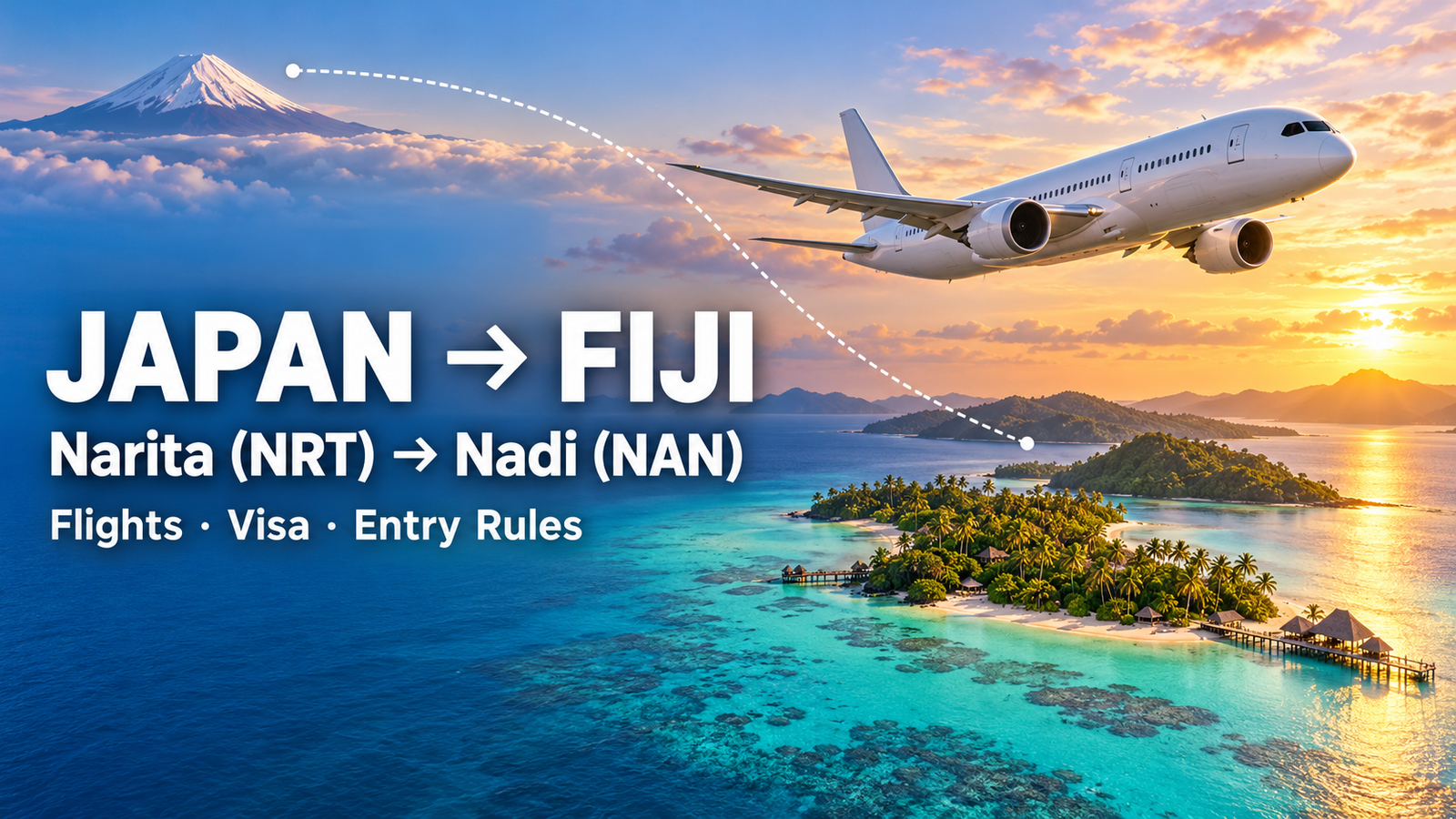
Yes. Fiji Airways operates flights between Tokyo Narita (NRT) and Nadi (NAN) without stops. It is the only direct connection between the two countries and there is no direct connection from Haneda, Osaka, Nagoya or Fukuoka. Since it began in 2018, Fiji Airways has operated the route from Narita and it has become the standard route to Fiji.
The duration of the flight is about 9 hours. The Narita departure time is in the afternoon or evening and Nadi is reached in the early hours of the next morning and the return flight leaves Nadi late at night and arrives in Narita early the next morning. These times change with the season, so please refer to the current timetables rather than the old blog post (including this one).
The one thing about frequency is that it is not every day! There have been a few times per week for flights, and the current flights schedule indicates the numbers vary according to time. In reality, that means when you can fly on the plane is to some extent determined by which days the plane flies. Before you leave work or book a hotel, consider the flight calendar.
Transiting Through the Heaven Authorities
There are also one-stop options if the direct flight does not work for your dates and/or the price is steep. These typically pass through a hub like Hong Kong, Singapore or somewhere in Australia or New Zealand and the entire trip is significantly longer than the direct. Sometimes they are less expensive, particularly during peak times, but then you substitute hours for money.
If you connect:
- Find out the travel regulations of your connecting country. For example, New Zealand: Most travelers must have an NZeTA to transit, and Australia: Australia has arrival authorisation rules for those who depart from the airport. Find out what applies to you on the exact route, if you hold a Japanese passport.
- If possible, book on one ticket. If you are booking individual flights and the first flight is delayed, the airline will not ensure your connection.
Even the travelers use the award miles of JAL on Fiji Airways due to the fact that it is an allied airline of JAL. It is only available on a first-come, first-served basis, so if you collect miles, it’s a good idea to check early.
The Timing and Cost of Flights
Seasonality is more of a factor for Japanese holidays than Fiji’s seasons. Direct flights are likely to sell out during Golden Week, Obon in mid-August, Silver Week and the New Year period. Fares and hotel rates are likely to rise during those times too. If you can, avoid those windows, as it’s the simplest method of saving cash.
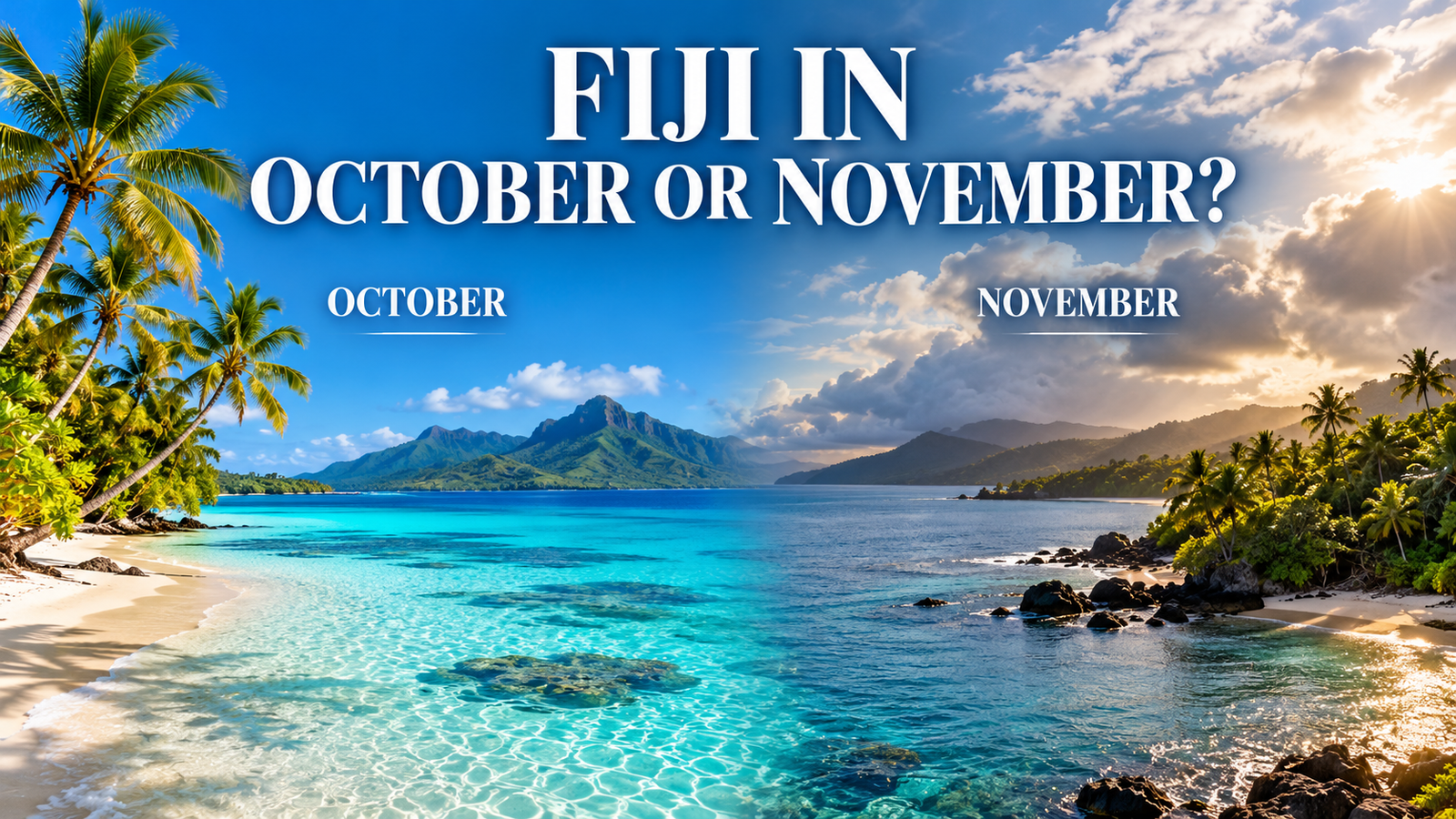
The other half of the decision is weather. For those looking to find out when the best time to go to Fiji is, May to October is the safe bet when the weather is dry. It is cooler, less humid and will provide you with the most reliable sunshine for snorkeling or island hopping. The wetter months are from approximately November to April, and are also cyclone months, although the bulk of the storm activity is over during January and March.
This means the Obon period in August is costly but there is no rain. The weather is good and fares are not too high in early to mid October, as well as the weeks following Golden Week. Always compare the dates as fares vary daily, and don’t assume that a month will be affordable.
Is It Necessary to Have a Visa to Enter Fiji for Japanese Nationals?
No, not for a holiday; Japanese citizens do not have to apply for a visa beforehand. Once you get to the border, you will be issued a visitor’s permit (with the usual restrictions).
Most sources say it’s up to four months, or about 120 days; a few sources say shorter. If you are having a normal holiday, this won’t matter, but if you are going for a longer period of time, please check with the Fiji Immigration Department or the Fiji Embassy in Japan rather than a travel blog.
The visa waiver is only for tourist and short-term visits. It doesn’t provide you with the right to work or study. And as with any border, being visa-exempt doesn’t guarantee entry. The decision is made by the immigration officer.
Fiji Entry Requirements for Japanese Travelers
The following is a list of items for the Fiji entry requirements.
When boarding flights from Japan to Fiji and landing at immigration in Nadi, be prepared for the following.
- Passport – valid for six months after your departure. This is the rule that catches people out. Do the check on the expiry date, and not the week before your departure. On some airlines at check-in it is strictly enforced.
- Return ticket/onward ticket. It might be required when checking in and at the border.
- Proof of accommodation and funds. Be prepared with details about your hotel. Don’t expect to produce bank statements, but it’s fair to be expected to be able to demonstrate your own ability to support yourself.
- Fiji arrival card. A Passenger Arrival Card will be filled out with details of your trip. Some of this process is being completed online in Fiji, so be sure to follow the official instructions from the Fiji government or airline before your flight to ensure that you know how to do it in the current format.
- Import and export permit. Biosecurity is Fiji’s priority. Declare food, plants, seeds and all wood and animal-based articles. Avoid packing fresh fruit, meat or snacks with fresh fruit. Undeclared items will result in fines.
- Travel insurance. It is not required of most visitors, but on the remote islands and with limited medical facilities, it is a good idea to have it.
- Vaccines: No vaccinations are required for travellers arriving from Japan. A yellow fever certificate is only needed if you have recently visited a country where yellow fever is present, and not a direct flight from Japan. If you are travelling to other countries, please refer to the official guidance.
The regular duty-free allowances will be permitted, including 200 cigarettes for adults. Cash or equivalent of FJ$10,000 or more has to be declared to customs.
Handy Items for Japanese Tourists
Some information that does not relate to entry but is of interest:
- Time difference. There is mild jet lag, as Fiji is 3 hours ahead of Japan.
- Early morning arrival. Since the flight arrives in the early morning, the hotel check-in won’t be operational. Please request early check-in or make your reservation the night before to ensure a room is available.
- Power plugs and voltage. Unlike Japan’s 100V, Type A plugs, Fiji has 240V and Type 1 plugs. The range is adequate for most phone and laptop chargers, but check the label, and bring an adapter. Facing higher voltage, the hair dryers and other appliances that are only available in Japan may be damaged.
- Transfer from the airport. On the western side of the main island, just a short drive to Denarau and the Coral Coast is Nadi Airport. For Mamanuca and Yasawa islands, boat transfers are usually from Port Denarau or Wailoaloa, check the timing of transfers around the time of your arrival by air.
Before You Book
A simple method to save a headache:
- Check passport expiry date with the six-month rule.
- Check the direct flight schedule to determine which days fly.
- If possible, avoid the peak days in the Japanese holidays.
- Make flight bookings then hotel and transfers with some cushion around the early morning arrival.
- Read the latest entry and customs information before leaving on official Fiji websites a week, or two, prior.
Next, plan your ground travel: see all our Fiji transport guides
Final Thoughts
Most travelers find it easy to travel from Japan to Fiji: One direct flight from Narita, no visa requirement, and a short list of documents. The key factors to get right are passport validity, flight days and biosecurity rules. Then the most difficult part of the trip to change during the day, getting in, is easy. Combine this with a good book on the best time to visit Fiji for your dates and you’re good to go!
Frequently Asked Questions
Is There a Direct Flight from Japan to Fiji?
Yes. Fiji Airways has non-stop flights from Tokyo Narita to Nadi and they take approximately 9 hrs. This is not a daily operation, please refer to the schedule.
What Are the Japanese Airports That Fly to Fiji?
There is only direct service to/from Tokyo Narita. Other cities require transfers to Narita or through another city.
Do I Need a Visa to Go to Fiji from Japan?
Not for tourism. On arrival citizens of Japan are issued a visitor permit. According to most sources, it’s 4 months, but if it will be a long stay, check with Fiji immigration.
What Is the Validity of My Passport for Fiji?
For a minimum of 6 months after you intend to depart Fiji. If shorter, airlines have the right to deny boarding.
Is There a Return Ticket Requirement to Go to Fiji?
Yes, you should have a return or onward ticket. It might be required upon check-in and at the border.
How Long Is the Flight from Japan to Fiji?
The estimated round-trip flight time is approximately 9 hours. A flight with a connection will have to be completed in more time, typically more than 12 hours.
When Is the Best Time to Go to Fiji from Japan?
Visiting Fiji during the dry season (May to October) has the best weather. In August, there is Obon but it’s also costly. Early fall is a good shoulder time.
What Immunization(s) Are Required for Travel from Japan to Fiji?
No specific vaccines are required for travelers who come straight from Japan. Please refer to official guidance if travelling by or from other countries.
Are There Any Restrictions on Bringing Food into Fiji?
Strict biosecurity precautions are in force. All food, plant products, seeds, wood and animal products must be declared and some are prohibited. If in any doubt, leave it at home or declare it.
Do You Need Travel Insurance for Fiji?
It is not usually required as a formal requirement for tourists but is strongly advised.
Read this post too:
Is October or November the Better Month to Visit Fiji?