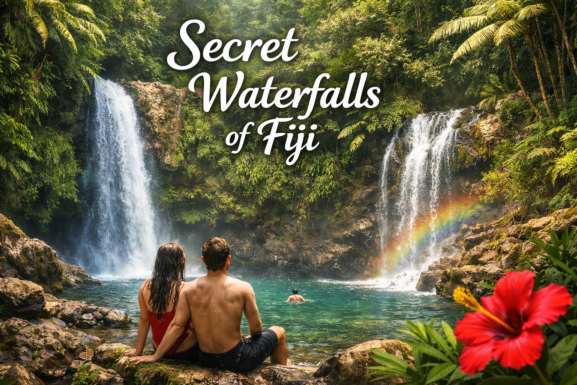

Hidden Beaches in Fiji You Won’t Find in Guidebooks
Everyone knows Fiji from postcards. Huts on stilts. Pools that stretch into the horizon. Drinks served at sunset.
That Fiji is real. You can go there.
But there is another Fiji too. It shows up less in photographs. Beaches where you might be the only person. The guidebooks tend to write about the same dozen or so. Here are some of the others.
Cove in Yasawa Islands
The Yasawa Islands stretch north from Viti Levu. They are volcanic. The lagoons shift between blue and green depending on the light. Fast ferries move up and down the chain every day. They stop at the resorts. They stop at the well-known snorkeling spots.
Between those stops, there are stretches of sand that most people never see.
One of them is about twenty minutes from a village by boat. The water is clear enough that walking through it feels strange—like there should be more resistance. When you move, small fish dart away from your feet.
Why it stays off maps: No resort built here, no tour company includes it on their list. The only way in is through the village. You ask. You arrange transport. Most travelers do not think to do this.
Who it suits: Couples who want an afternoon to themselves. Snorkelers who do not enjoy kicking other people in the face.
What to know: Bring water. Bring food. Bring sunscreen. There are no shops here. No staff. Nothing except what you arrived with.
A Quiet Stretch Near the Coral Coast
The Coral Coast runs for about eighty kilometers along Viti Levu. Hotels and resorts sit along most of it.
Tourists usually think beaches belong to the hotels. Or that if a beach isn’t attached to a resort, it’s probably not worth the trouble. Neither is correct.
Drive past the main resort area. Maybe twenty minutes. Look for a dirt track with no sign. Fishing families from nearby villages use it to reach the water. Follow it.
This beach is different from the ones near the resorts. At low tide, the reef creates small pools. The sun heats the water. Local children sometimes splash around in them. Their parents fish further out where it’s deeper.
What makes it different: Most beaches along the Coral Coast face some other direction. This one faces the open ocean. The sun sets straight ahead, nothing in the way.
Finding it: From Sigatoka town, drive toward Suva for approximately fifteen minutes. Watch for a modest wooden sign advertising fresh fish near a stand of palms. The access track requires reasonable clearance—a standard rental car manages carefully. Park near the palms and walk five minutes through the coastal forest. The beach opens suddenly, as if revealed.
Best for: Sunset observers. Photographers. Anyone curious about why Fiji’s main island still holds surprises.
Practical note: Like most hidden beaches in Fiji, this one has no facilities. Time visits to catch late afternoon light.
A Beach Outside Savusavu with Volcanic Sand
Savusavu is small. Sailors and divers visit for the harbor and reefs. Most never see the other side of the peninsula.
The beach there looks different. The sand is dark gray, mixed with crushed coral. It makes noise when you walk. Behind the beach, rainforest covers the hills. Wild orchids grow up there. The water changes color slowly as you walk out. You can go pretty far and still touch the bottom.
Why guidebooks miss it: No sign. No parking lot. You need a 4WD or you walk at the end.
An Eastern Taveuni Shoreline
Taveuni is called the Garden Island. Divers come for the reefs. The eastern side has beaches that almost nobody visits.
One cove only appears at certain tides. A stream flows into the sea here.
Wildlife: Orange doves in the trees near the beach. Monitor lizards on the rocks sometimes. Watch from a distance.
How to get there: From Taveuni, get transport to the end of the road on the east side. Walk along the coast past a few smaller coves. Check tide times first. At high tide, the beach is very small. Best swimming is two hours either side of low tide.
Who it’s for: People who like watching animals. Divers who want something to do between dives. Travelers who have already seen the main spots.
Safety: Currents near where the stream meets the sea. Pay attention.
A Remote Mamanuca Sandbank
Lots of tourists visit. But even here, some places stay empty.
A few kilometers from the nearest island with people on it, there is a sandbank. It only exists at low tide. When the water goes down, a white crescent of sand appears. Big enough for maybe twelve people. When the tide comes back up, it disappears completely.
What happens: Show up two hours before low tide. Watch the sand appear as the water pulls back. For the next four hours, you have your own island. No buildings. No people. Just water and sky. Then the tide comes back and takes it away until tomorrow.
How to arrange it: Not every boat charter knows about this one. When you book a private boat in the Mamanucas, ask specifically about tide-dependent sandbanks. Local operators who know the area will understand.
What to bring: No shade. No bathrooms. Sunscreen, hat, lots of water. Non-negotiable. Not optional.
How to Find Hidden Beaches in Fiji
The beaches described above offer starting points, not exhaustive coverage. Fiji holds hundreds of islands and countless unnamed coves. Finding them requires an approach more than luck.
Talk with villagers. This advice matters most. Local clans called mataqali own the coastline. Villagers know their shoreline meter by meter. Asking respectfully, offering sevusevu where appropriate, and accepting guidance opens access to places no website lists.
Hire small local operators. Large tour companies follow established routes. Independent operators with smaller boats venture where schedules don’t require them to go. Their knowledge often proves invaluable.
Walk beyond resort boundaries. Many travelers assume resort property lines extend indefinitely. They don’t. Walking past manicured edges, following the natural coastline, often reveals a wild beach within fifteen minutes.
Check tide schedules. Some hidden beaches in Fiji only exist—or only become accessible—at certain tides. Tide apps downloaded before travel help with planning.
Respect village protocols. Always ask permission before walking through village areas to reach the coast. A sincere vinaka (thank you) and respectful behavior accomplish more than any guidebook.
Fiji’s well-known beaches will remain beautiful. They deserve their reputations. But beyond them—past ferry routes, beyond resort boundaries, through conversations with villagers who smile when asked about quiet places—another Fiji waits.
The Fiji of sandbanks that rise and fall with tides. Of coves where sound extends no further than wind through palms. Of shorelines that ask only respectful visits and request nothing else be left behind.
The hidden beaches in Fiji are not hiding. They simply wait for travelers who care enough to look.
Ready to explore beyond the guidebooks? Fiji Dream specializes in itineraries that balance iconic experiences with genuine discoveries.