
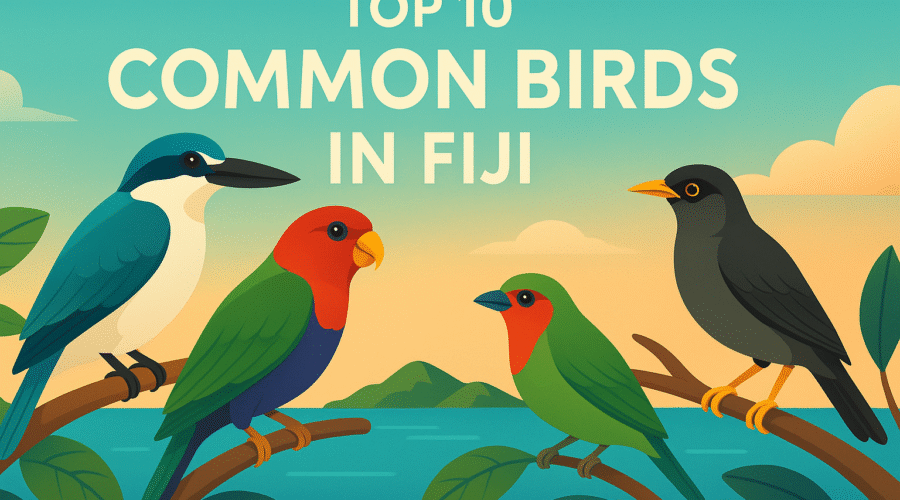
Top 10 Common Birds in Fiji
When you get to Fiji, you see pretty quickly it’s not only about the beaches. There are birds everywhere. You don’t have to go birdwatching or anything — they just show up around you.
You’ll spot some bright little birds in the gardens, and then there are the seabirds that just kind of drift along the coast. This list is just to help you figure out what’s what without overthinking it.
An Island Stage for Winged Wonders
So, why is Fiji such a hotspot for unique birds? It ultimately boils down to real estate. These islands are beautiful, remote sanctuaries floating in a wide blue ocean. The deep forest interiors give way to tangled mangroves, which kiss the famed sandy beaches. This variety of neighborhoods supports all kinds of residents. Many of the birds in Fiji have developed into unique species as a result of their prolonged separation. You are witnessing living gems that are unique on our planet.
There’s a cultural layer, too. For locals, these aren’t just “birds”; they’re part of the soundscape of life. An elder might note that a certain call means rain is coming soon. This deep, intuitive connection to nature is something you can feel, a rhythm that you, as a visitor, get to step into.
Birding Without Trying: The Easiest Safari You’ll Ever Have
The absolute best part? You don’t have to try to see these common birds in Fiji. You will. Full stop. They are the confident locals who know they own the place. That cheeky bird eyeing your toast at the breakfast buffet? You’ll know him. The piercing call that becomes your 6 a.m. wake-up call? You’ll learn it. They’re in the resort flowerbeds, on the power lines along the coastal road, and singing from the roof of your bure.
This is birdwatching for the rest of us. You only need to be willing to sometimes look up from your reading; no special equipment is needed. Are you prepared to get to know the characters?
The Top 10 Common Birds in Fiji
1. The Fiji Parrotfinch: The Garden Gem
This tiny man is so attractive. Imagine a little bird with a head dipped in crimson paint, and painted the brightest shade of green. They walk down garden walkways in happy, chatting groups, frequently at your feet, nibbling at seeds. It’s like witnessing live confetti emerge from the grass in a flock.
2. The Orange Dove: The Forest Flame
The first time you see one, it will always stick in my memory. It doesn’t appear real. The male is stunning, nearly bright orange, as though it had ingested a portion of the sun.
3. The Wattled Honeyeater: The Town Crier
You will 100% hear this bird first. It’s call is a loud, raspy, and persistent cha-klee-chak! that becomes the soundtrack to your trip. It’s a bold, charcoal-grey bird with a funny little black blob of skin (the wattles) behind its eye. They have no fear and will inspect your lunch with zero shame.
4. The Red-Vent Bulbul: The Cheeky Newcomer
Think of this as the common sparrow of Fiji, but with more flair. It’s sleek and brown with a cool black head and a secret splash of red under its tail (that’s the “vent”). Introduced long ago, they’ve taken over towns and gardens, and their noisy squabbles in fruit trees are a constant source of entertainment.
5 The Fiji Woodswallow: The Sky Dancer
Look up. On a clear day, you may witness these incredible birds flying and gliding with grace. They have a cute, tiny black mask over their eyes and a wonderful, dreamy blue-grey color. They enjoy forming a line on telephone wires, much way a choir pauses before performing their next aerial ballet.
6. The Spotted Fantail: The Energetic Acrobat
This bird is pure, joyful energy. It never, ever stops moving. You’ll see it in the forest, constantly flitting about, fanning its beautiful tail into a perfect semi-circle to scare up insects. It’s a tiny, spotted grey thing with a friendly white eyebrow, and it might just come check you out on a quiet trail.
7. The White-Collared Kingfisher: The Blue Flash
Don’t be confused if you see a stunningly blue kingfisher far from the water. This one enjoys mangroves and gardens. Its hue is an almost amazing electric turquoise, accented by a pristine white shirt front. What’s that booming, rattling cry coming from the trees? That’s probably him.
8. The Lesser Frigatebird: The Sky Pirate
And finally, look to the open ocean. Soaring high above is the magnificent frigatebird, a living pterodactyl. It’s a massive, black bird with long, bent wings and a forked tail. They can glide for hours without a single flap, masters of the wind. Seeing one circle your boat is a humbling reminder of the wildness of the Pacific.
9. The Collared Lory
This bird is the national bird of Fiji. It makes loud, sharp calls. You will often see it hanging upside down in flowering trees while it eats.
10. The Pacific Kingfisher: The Patient Fisherman
This bird often sits very still on fence posts or low branches. It has a blue-green back and a large head. It stays motionless while it watches for insects or lizards to eat. You will often see it near beaches, always watching and waiting.
Your Simple Spotting Guide
- Just Open Your Door: Your resort garden is a front-row seat. Lories, parrotfinches, and bulbuls are all regulars.
- Listen in the Village: The Wattled Honeyeater’s call is the sound of village life.
- Walk a Forest Trail: Even a short walk can reward you with the Spotted Fantail’s acrobatics or a glimpse of the legendary Orange Dove.
- Gaze Seaward: Any boat trip or afternoon on a less-crowded beach will feature the soaring Frigatebirds.
The Real Magic of Birds in Fiji
The sight of a bright red lory or the distinct call of a honeyeater are the details you’ll remember later. These birds add life to the entire Fijian landscape.
This guide should help you recognize them. Now you know what to look for. Next time a shadow moves nearby or you hear a strange call, just look up. It’s likely one of Fiji’s common birds going about its day.