Have You Tried the Popular Fruits in Fiji? What Makes Them So Unique?
Visitors to Fiji quickly discover a simple truth. The islands give more than simply lovely beaches. A world of diverse flavors awaits at roadside vendors and little marketplaces. A seller provides a slice of unknown fruit. The first bite reveals a taste entirely different from supermarket fruit back home. This is the authentic Fiji experience.
The true essence of the islands is often found in their food. The fruits in Fiji are a central part of this discovery. They are not merely snacks. Each one provides a direct taste of the place. A Fijian mango defines tropical sweetness, its juice and flavor standing out even in a region known for fruit. This level of quality is typical for the popular fruits in Fiji, making eating them a highlight of a trip. The secret to their vibrant taste is found in the islands’ natural environment. An exploration reveals the reasons.
It’s All in the Dirt and the Sun
The unique quality of Fijian fruit begins with the soil. Fiji’s soil comes from volcanoes. It is rich in essential minerals for plants. The sun shines most days. It is always warm. This is what fruit needs to grow well.
The fruit is picked when it is ready to eat. It is sold close by. It does not travel far. It is never put in cold storage for shipping. This means it tastes exactly how it should – like real fruit.
It’s allowed to soak up every last ray of sun, developing a sweetness you can almost feel in the air. The reason that these tropical fruits of Fiji have become popular fruits in Fiji is that they don’t just taste different; they taste more: more flavor, more scent, more life.
How Fruit Weaves Its Way into Fijian Days
Fruit in Fiji is not merely a food item, but a constant presence in daily life. It appears in nearly every setting. Morning markets burst with activity, featuring tall stacks of papaya and bananas of various sizes, all amid the sweet smell of guava. A common gesture of welcome involves offering fresh fruit, such as a cold coconut or pineapple slice, and extending a simple and refreshing greeting. Even within upscale resorts, morning meals prominently feature displays of locally grown fruits.
This deep connection means that when you try these fruits, you’re not just snacking. You’re sharing in a little piece of daily Fijian life. Ready to meet the characters in this delicious story? Here are the popular fruits in Fiji you absolutely have to get to know.
Your Handy Guide to Fiji’s Fruit All-Stars
Think of this as your cheat sheet for the market.
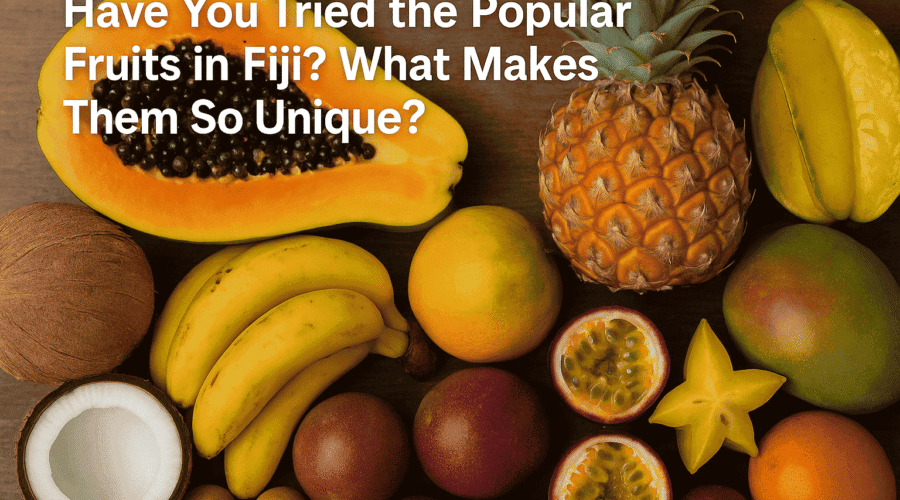
1. Mango (Maqo):
The king of the Fijian summer. When they’re in season, it’s a national celebration. They’re smaller, often a bit fibrous, but my goodness, the flavor is an intense, sticky, tropical punch. Eat them over the grass unless you fancy a sticky shirt for the rest of the day!
2. Papaya (Pawpaw):
This was my breakfast every single day. Its soft, orange flesh is subtly sweet, almost buttery. The standard way to eat papaya in Fiji is with lime. This combination makes the overall flavor brighter.
3. Fijian Pineapple:
This isn’t your standard supermarket pineapple. I bit into one expecting that familiar sharp tang and was blown away by pure, unadulterated sugar. It’s so sweet and low in acid that you can eat a whole lot without that prickly feeling on your tongue.
4. Banana (Jaina):
Forget the one variety you know. Bananas in Fiji appear in countless varieties. A perfect, natural snack for a busy day of sightseeing.
5. Coconut (Bu):
In Fiji, a coconut serves a direct purpose. You receive a freshly opened green coconut, providing cool water to drink and soft jelly to eat, straight from the shell. The water inside? Clean and sweet. Then you scoop out the soft jelly. It’s the real thing.
6. Soursop (Serasera):
Looks strange – green and spiky. But the inside is what counts. The white flesh is soft. The taste is hard to pin down. Maybe like strawberry and pineapple had a fruit. It’s strong. Good in a smoothie if you’re trying it first.
7. Breadfruit (Uto):
Important: don’t eat this raw. It’s not that kind of fruit. Cook it over a fire or boil it. Then it gets soft, like a fluffy potato. The flavor is plain, a bit nutty, like fresh bread. People eat it with meals instead of rice.
Where Your Fruit Adventure Begins
You can easily find fantastic fruit all over Fiji. Local markets offer the most authentic selection. Vendors can identify any unfamiliar fruit you point to. For a quicker stop, roadside stalls provide immediate access to fresh, sweet pineapples and coconuts. And your resort breakfast is the easiest place to start trying the local favorites. Just ask a staff member what’s good. They are usually very helpful.
Fijian fruit does more than taste good—it creates a lasting impression. The unique flavors become permanently linked to the memories of where and when you tried them. The memory of trying a new fruit stays with you long after your trip is over.
The Flavor That Stays With You
What makes these popular fruits in Fiji so special, in the end, isn’t just the science of soil and sun. That first taste of coconut water after a hot day. The sticky, sweet mess of sharing a mango. These are the moments you take home. The flavor and the memory stick together. Long after you leave, the taste brings you right back.
The flavor becomes part of the story. That’s what you actually carry home.
The taste and the memory become one thing. A simple flavor can send you right back to the islands. These fruits become edible souvenirs – impossible to pack but unforgettable to carry home.
The best approach is simple: choose local over familiar. Pass on the imported fruits and select something unfamiliar from a market stall. This single decision will lead to a more authentic and rewarding travel experience.