
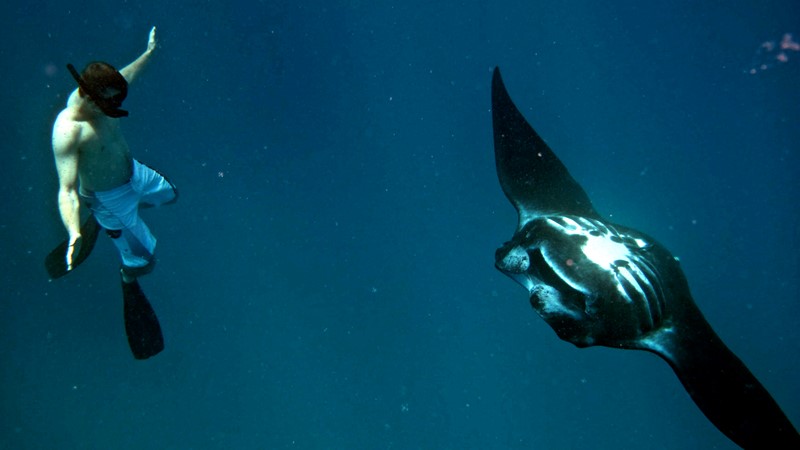
You’ve seen that photo; the one with the manta ray soaring under someone in unbelievably blue water. And it’s probably why you have started searching in the first place.
But before we get into the details of how or where, just pause on that image for a second. That moment you’re picturing? It’s real. But it’s also quiet. It’s slower than you think. And it’s not about you at all.
What Are You Actually Looking At?
First thing first: those giant winged shapes aren’t monsters. They eat tiny food in the water. They swim and let the water pass through their mouths to catch it. They do not eat anything big.
This fact alone should ease your mind: they have zero interest in you as food. No teeth for biting. No stingers like some other rays. Just a big, peaceful animal going about its daily business of eating the smallest food imaginable.
Why Fiji Keeps Showing Up on Your Feed
You’ve probably seen the photos. Crystal clear water, mantas gliding through sunbeams. Fiji is built for this. The islands are close together, especially in the Yasawa group. Ocean water rushes through the narrow spaces between them.
This rush of water does something important. It pushes the manta rays’ tiny food, called plankton, into one place. It piles up.
From May to October, the wind helps make this happen. So the mantas are there. They come to feed. The mantas show up like clockwork. They’re not performing for tourists; they’re following their food source. This predictable pattern is what makes Fiji one of the few places where your chances of an encounter with Manta rays Fiji are genuinely good.
The Cultural Layer You Might Not See
Many tourists do not see this part. Fijian people have cared for this ocean for a very long time. This is not new. For them, the land, the sea, and the people are one connected life. This idea is called vanua.
Because of this, villages have made special rules. They call some areas tabu. This means no fishing is allowed there at all. These rules are old. They were not made for visitors.
In these protected places, their tiny food can grow. More food means the manta rays Fiji rely on will keep coming back.
The person guiding your boat probably knows this water like a family member. Their father and grandfather fished here. They know how to read the tide. They know where the mantas will be. This knowledge is not from a book. It is from life. These operators aren’t just running a business; they’re sharing their home according to rules their community has honored for generations.
What Your Morning Actually Looks Like
Let’s get practical. Here’s how most manta excursions unfold:
You start early in the morning. The sea is very calm then. The boat ride is part of the trip. You will go past small, far away islands. You will watch the colors of the sky and water change as the sun rises. The crew will be pointing out landmarks, maybe sharing stories. The mood is excited but relaxed.
When they spot mantas (often by seeing their dark shapes from the surface or watching where birds gather), the engine cuts. The briefing is straightforward: “Move slowly. Don’t chase them. No touching—it harms their skin. Just float and let them come to you.”
Then you’re in the water. It’s warmer than you expect. You’ll adjust your mask, steady your breathing, and look down.
First, there’s just blue. Deep, endless blue. Then a shadow separates itself from the darkness. It grows into a shape. This is your first real glimpse of the manta rays Fiji are famous for
The quiet is what surprises most people. Just the sound of your own breathing and the sight of these animals moving with unhurried purpose. They might perform barrel rolls as they feed, spinning gracefully through the plankton clouds. Time does something strange—it feels both endless and over too quickly.
Answering Your Real Concerns
Is this safe?
Yes. The mantas themselves pose no threat. The manta rays are peaceful. They do not mind people who are calm and keep their distance. The actual risks are simple. You need to be careful of the sun, and you might get tired. You could swim into someone next to you. The guide is there to help.
Can you do this if you are not a strong swimmer?
Yes. You only need to be able to float in deep water. The company will give you something to hold onto in the water, like a float. You will stay at the surface and watch below. If you are comfortable in a pool, you will be comfortable here.
What if I panic?
Tell your guide immediately. They’ve seen it all. There is no shame in this. If you get tired or feel nervous, signal to your guide. They will help you back to the boat.
What if we do not see any manta rays?
Remember, these are wild animals. Nothing is ever guaranteed. A good tour leader will tell you honestly how the sightings have been lately. Some days you may see many. Some days you may only see one far away. That is what it means to visit animals in their home. Respecting this wildness is part of the true manta rays Fiji experience.
The One Rule That Actually Matters
Everything comes down to this: watch, don’t touch.
People naturally want to touch things. But touching a manta ray hurts it. Our hands remove a protective layer on its skin. Without this layer, the ray can get sick.
Following them or swimming too close also scares them. It causes them stress. If they get scared often, they will stop coming to these feeding places.
The best thing you can do is watch. Stay still. Let the manta rays come near you if they want to. When they feel safe, they will stay. This means you get to see them.
When you pick a tour company, pay attention to what they say about the rays. The best ones speak about them with genuine respect, like honored residents of their community. They’ll have clear guidelines and enforce them—not as arbitrary rules, but as necessary protections.
So Should You Go?
If you need constant action, this isn’t it. There are quiet moments. You might float for twenty minutes seeing nothing but blue. You need patience.
But if the thought of swimming with manta rays fiji in their own home sparks genuine curiosity, then yes. This experience is for you. This is for you if the ocean calms you down. If you are okay with waiting quietly for a good moment. If you know that sometimes the best part of a trip is not an activity, but something you watch.
What Stays With You Afterwards
You’ll climb back on the boat different. There’s usually a moment of shared silence, then everyone talking at once—”Did you see the one with the notch in its fin?” “That smaller one came right under me!” The camaraderie is immediate.
Later, with the salt drying on your skin, you will feel calm and happy. It is not a loud, shouting kind of joy. It is a quiet thankfulness for sharing a moment with a wild animal.
Years later, you may forget the boat’s name. You might not remember your lunch. But you will remember the feeling of the water. You’ll remember the specific pattern of spots on the manta that circled you twice. You’ll remember the silence.
That’s what this is about. Not collecting another activity for your travel resume, but collecting a moment that changes how you see the natural world. When you look at the ocean afterward, you’ll know what moves beneath the surface. And you’ll understand why places like Fiji fight to protect it.
The manta rays Fiji protects aren’t just animals; They’re proof that when communities choose protection over exploitation, when visitors choose respect over intrusion, something beautiful can thrive. Your visit, done right, becomes part of that story.

Please email us your inquiries at booking@fijidream.co.jp
Our customer service representatives will get in touch with you soon.
Only guests who have booked can leave a review.