
Fiji is an island nation that imports most of its fuel, which makes energy both a cost and a climate issue. This category explains how the country generates electricity, where renewables fit in, and how energy policy shapes daily life.
You will find explainers on hydropower, solar and biomass, plus policy coverage. If you are traveling, the practical notes on voltage, plugs and power on remote islands are the most useful parts. For wider context, see Environment in Fiji.
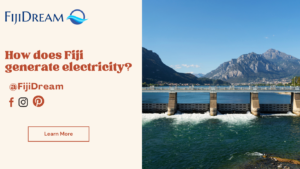
Most grid electricity on the main islands is supplied by Energy Fiji Limited (EFL), the national utility. The generation mix combines hydropower, diesel-fired plants, biomass and smaller contributions from wind and solar. Hydropower comes mainly from the Monasavu scheme in the central highlands of Viti Levu, which has long been the backbone of renewable supply. Biomass comes largely from bagasse, the fibrous residue left after sugar cane is crushed, which sugar mills can burn to produce power. The Butoni wind farm near Sigatoka adds a smaller wind contribution. Our guide on how Fiji generates electricity walks through each source.
Fiji has no significant oil or gas production, so petroleum products are imported. That exposes the economy to global fuel prices and makes diesel generation expensive. Every dollar spent on imported fuel is a dollar not spent elsewhere, and this is one of the main reasons the government and utilities push renewable projects.
Fiji has publicly committed to reaching net-zero emissions by 2050 and has set ambitious targets for renewable electricity. Policy documents, targets and project timelines change, so treat any figure as a snapshot and check official sources such as the Department of Energy and EFL for current numbers. Our policy articles explain the reasoning behind these goals, the challenges of financing projects in a small economy, and what communities gain when projects succeed.
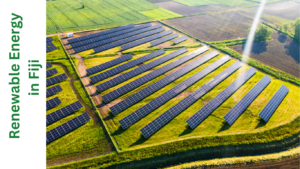
Many smaller islands are not connected to the main grid. Villages and resorts there rely on diesel generators, solar home systems, small solar-diesel hybrid setups or a mix. Solar has an obvious advantage in a sunny country, since it avoids fuel deliveries by boat. Batteries remain a cost and maintenance challenge. For travelers, this explains why remote resorts sometimes limit air conditioning or charging to certain hours.
Fiji uses 240-volt, 50 Hz electricity, with three-pin plugs of the type used in Australia and New Zealand. Travelers from Japan, the United States and many other countries need a plug adapter, and some devices need a voltage converter, so check your charger label before you pack. Power cuts happen, especially after storms. A power bank, a flashlight and a plan for charging devices are sensible on any island stay.
Tropical cyclones can damage power lines, poles and generation equipment. Severe storms, such as Cyclone Winston in 2016, showed how long restoration can take in affected areas. The wet season runs roughly from November to April, so if you travel then, build flexibility into your plans and check weather advice before island transfers.
Electricity and fuel are costly in Fiji, and island resorts feel that most. You can help by switching off lights and air conditioning when leaving your room, reusing towels, and choosing accommodation that publishes its approach to solar power, water and waste. These small steps matter more on islands where every unit of power is expensive.
Energy is also a business story. Independent power producers, solar developers and efficiency firms operate in the Fijian market, and policy affects their projects. Our coverage looks at the opportunities and the limits, including grid connection, land access and financing. None of this is investment advice, and anyone considering a project should take local legal and technical guidance.
Start with how Fiji generates electricity, then read the renewable policy article for the larger picture. To see how climate pressure shapes these decisions, read Environment in Fiji.