
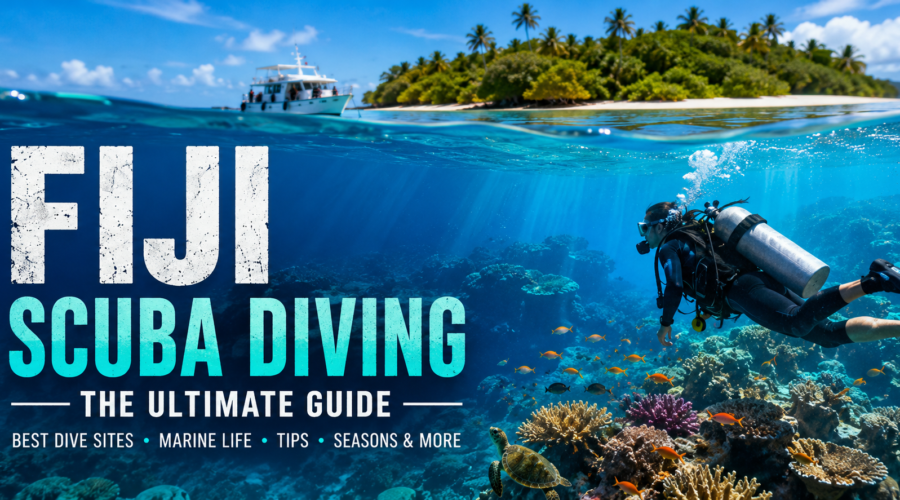
Fiji Scuba Diving: The Ultimate Guide for Beginners & Experienced Divers
It isn’t some marketing slogan for scuba diving in Fiji. Among the most bona fide underwater destinations on Earth, it boasts more than 1,500 types of fish plus 400 coral species and dive sites that encompass swift currents for experienced divers as well as calm waters where first-timers are able to manage by day one.
Whether it is your very first time picking up a regulator or the hundredth dive you’ve logged, here is all you should know before going in the water.
Why Fiji? The Honest Case
Fiji can claim the title of “Soft Coral Capital of the World,” and it delivers. The nutrient-stranding warm waters circling the islands support staggering levels of coral density – walls of barrel sponges, fire coral, and sea fans that most Indo-Pacific destinations simply can’t match at this scale.
Visibility regularly hits 20–30 meters. Year-round water temperatures of 24 C — 29 C (75 F — 84 F) mean no thick wetsuit. And unlike those more popular dive destinations, many of the best sites in Fiji are still sparingly trafficked.
On the flip side, a few sites feature intense currents that require some level of experience. Just know which ones are for beginners going in.
Top Dives by Experience Level
For beginners:
- Beqa Lagoon — protected waters, shallow reefs teeming with fish life. A top spot to get a new diver started
- Coral Coast (Viti Levu) — easy to get to from the main island, visible with reasonable conditions.
Mamanuca Islands — leisurely boat rides, sheltered lagoons, ideal for introductory open-water dives
For intermediate divers:
- The Yasawa Islands – more remote, better coral, some current. Worth the extra effort.
- Namena Marine Reserve — a protected area with high biodiversity. Less visited, higher reward.
For experienced divers:
- Great White Wall (Taveuni) — a wall draped all in white soft corals marked by a thermocline drop. What Makes this Pacific Immortal One of the Most Photographable Dive Sites
- Rainbow Reef (Taveuni) is famous for its color and current Drift diving at its best.
- Structured bull shark dives with up to 8 species of shark in one dive at Shark Reef Marine Reserve (Beqa). Professional management, not for the light-hearted.
Certification: What You Need
At a bare minimum, you must have an Open Water certification (PADI, SSI, or equivalent) to scuba dive in Fiji on your own. All major certification agencies are accepted by most Fiji dive operators.
Discover Scuba Diving (not requiring certification) is offered by many resorts as a supervised introductory dive. It’s a real option, but you will be limited in depth and always supervised by an instructor.
Similarly, for sites such as Rainbow Reef or Shark Reef, you need to be Advanced Open Water certified to dive them. Talk operators on this — those sites represent real danger to the ill-equipped diver.
What to Expect from Your Fiji Scuba Diving Packages
Your options for scuba diving in Fiji span bare-minimum day-trip operators to complete over-the-top liveaboards across multiple archipelagos. The way to think about them is:
Day trip packages are best used for resort stayers who want to include diving in their stay but don’t wish to dedicate their entire week (or more) to the sport. This is normally 2-tank dives, equipment inclusive, and ranges from FJD 300–450 per day.
Resort dive packages combine accommodation with a limited number of dives throughout your trip. If diving is your primary motive for visiting, these provide the most bang for your buck. If you’re an advanced diver, find packages that offer Nitrox — it expands your bottom time on multi-dive days.
Liveaboard packages are where it gets serious. You are on the water 24/7, reaching remote locations not accessible by day-trip boats, logging 4–5 dives daily. Operators who run the tourist routes through the Bligh Waters and Koro Sea cover areas of sites that many tourists never get to see. The cost is higher, but for an equal quality dive, the value is high.
Things to check before securing any package:
- Is equipment part of the deal or rented separately?
- What’s the instructor-to-diver ratio?
- Are the dive sites suitable for your certification level?
Does it include the marine park entry fee?
Best Time to Dive in Fiji
Diving in Fiji is year–round, but not all conditions are created equal:
- May — October (dry season) — excellent visibility, milder seas, water a little cooler. Peak season for diving.
- November to April (wet season) — warmer water, sporadic low visibility following heavy rain, plus fewer tourists and cheaper Fiji scuba diving bundles.
If the only thing you care about is the Great White Wall or Rainbow Reef, then dry season is the more sensible bet for conditions.
A Practical Note on Booking
Plan your scuba diving Fiji packages prior to arrival. Especially during high season, the better operators, especially liveaboards and Shark Reef dives too, can book out weeks in advance. Rolling up and thinking you’ll just figure it out on the day is a gamble that rarely pays off.
Fiji’s underwater world rewards planning. If you do the work before touchdown, the dives will come through.