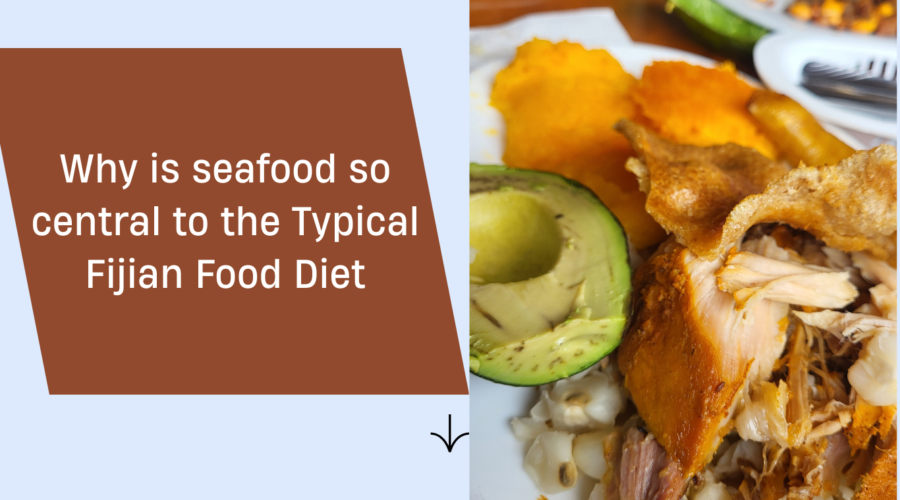
Why is seafood so central to the Typical Fijian Food Diet?
Fijian people don’t just eat seafood. They have a conversation with the ocean. Every meal is its reply. You won’t fully grasp that until you spend a morning there in the village of Navala. As the first pink streaks of dawn lit the sky, people pushed their wooden bote into the still water. They don’t check a weather app; they watch the birds skimming the surface. “The matamawai are busy,” they say, pointing. “The small fish are up, so the big ones will be feeding.” An hour later, you would haul in two gleaming walu. In the afternoon, those fish, simply grilled over coconut husks, can feed three generations of a family under the mango tree. These days, you can feel the ocean speak. It’s a dialogue that defines Fiji. So, why is seafood the absolute beating heart of the typical Fijian food? Let me tell you, it’s a story written in saltwater and shared with bare hands.
The Old Ways: Fishing as a Language
The way Fijian fish is intimate, almost quiet. You won’t see many giant trawlers in the village waters. You’ll see young boys learning to throw a cast net, their faces a mask of concentration until the perfect circular splash blossoms on the water.
This knowledge is their inheritance. It’s knowing that the sici (clams) are fattest after a full moon, or that a certain ripple means trevally are hunting below. It is tied to a law of respect: the qoliqoli. These are their fishing grounds, passed down. But it’s not just a law. It is a deep promise. They take only what they need. They leave the rest for tomorrow. For their children. So when a man brings fish home, he brings more than a meal. He brings that promise, kept. He’s bringing a story of skill, patience, and a pact with the deep blue. This is the soul of Typical Fijian food culture—it begins with reverence.
What’s Swimming onto Your Plate?
Walk through any local market, and the chorus hits you first: “Fresh ika! Kaikoso today!” The variety is a vibrant, wet, and wonderful mess.
- The Go-To: Fish. For a quick, perfect lunch, nothing beats ika vakalolo—fish simmered in a gravy of lush coconut milk until it’s fall-apart tender, mopped up with a chunk of dalo. Or, my personal favourite, fish straight off the bbq, its skin crispy and salty, served with a fiery horohoro (chilli) relish.
- The Treasure Hunt: Shellfish. You’d shuffle through the cool sand until you felt it: the hard, rounded secret of a kaikoso. That pot of clams, steamed until they sighed open in a simple coconut broth, tasted like the whole ocean had given you a gift. It tasted like being eight years old.
And the octopus—the kuita. That’s a different game. It’s a labour of love, that dish. You taste every minute of the effort.
So their menu? It’s never set. It depends entirely on what the ocean offered up that morning. One day, it’s sweet clams from the sand, the next it’s a clever octopus from the reef. Eating here means eating with the tides. Seafood in Fiji isn’t just a category of food. It’s the day’s news, served on a plate.
The Magic in the Making
Here’s the thing about Fijian cooking: they keep it simple. Why get in the way of something perfect? Their best dishes are just a spotlight on what’s fresh.
Take Kokoda, for example. That’s their masterpiece. You cut up the freshest fish you have—right from the morning’s catch. You let the lime juice do its work, turning the flesh firm and white. Then you drown it in the good stuff: rich, heavy coconut cream straight from the nut. You chill it. On a blazing hot day, you eat it straight from the bowl in the fridge. That first bite? It’s cold, it’s tangy, it’s rich.
But the real recipe? It’s not written down. It’s sharing. It’s one big bowl in the middle of the mat, and everyone is reaching in. It’s using your hands. It’s messy fingers, loud jokes and arguing over the last prawn. The food is just the reason they all sat down. The meal happens in the talking, the laughing, the passing of the story with the bowl. That’s how you cook a Fijian meal. You cook it together.
Food as Their Welcome Mat
This is where food becomes culture. In Fiji, you cannot truly welcome someone without offering them the best of the sea. When a guest arrives, a spread of the day’s finest catch is the purest form of “welcome home,” even if they’ve never been here before. At a wedding, the size of the lovo and the variety of fish and lobster speak volumes about the family’s joy and respect. In these moments, Fijian Food stops being just food. It becomes a language of love, respect, and profound connection.
New Waves, Old Anchors
Yes, things are changing. In the cities, you can buy frozen chicken or imported sausages. Global pressures exist. But here’s what you will see: the pull of tradition is a strong current.
The qoliqoli system is defended with fierce pride. And in the villages? The old rhythms hold. Kids still learn to fish. Grandmothers still know when the clams are done. And you can’t have a real feast without food from the sea. Things change, but what they eat at their core doesn’t. The typical Fijian food is anchored in the ocean. That anchor isn’t moving.
The Eternal Conversation
So you don’t ask why. You just know.
Fish isn’t just food here. It’s breakfast. It’s lunch. It fills their conversations and fills their days. It’s the sound of a knife scraping fish outside. They welcome people with this Fijian food. They give thanks with it. It’s simply their life.
No one plans the typical Fijian food diet. You live surrounded by the ocean, and the ocean provides. So you eat what it gives. Every single day. The logic is straightforward.
It’s the coming together that matters most. It’s sharing from the same bowl. In those moments, they are most themselves. Every single bite of fish is part of that feeling. That’s the truth of it.